🎙️ Meet The Guests
Every guest gets the deep dive treatment. Choose your read: quick hit, solid session, or full rabbit hole.
Neurosurgeon turned health revolutionary. Founder of Kruse Longevity Center. Pioneer of quantum biology and circadian health. Connects sunlight, mitochondria, and Bitcoin into one unified philosophy. Moved to El Salvador to work on health freedom at a national level.
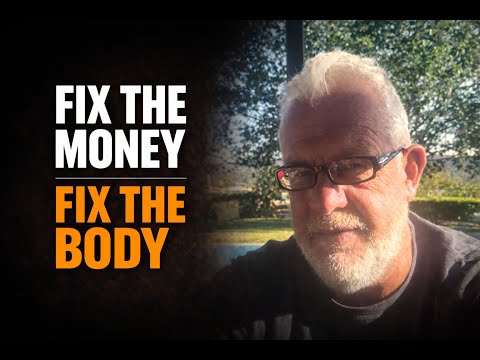
⚡ The Quick Hit — Dr. Jack Kruse
Dr. Jack Kruse is a neurosurgeon who weighed 357 lbs before a personal health crisis in 2007 forced him to rethink everything he knew about medicine. He discovered that modern medicine was missing the biggest factor in human health: our relationship with light, water, and magnetism.
He founded the Kruse Longevity Center and pioneered "quantum mitochondrial health" — the idea that your cells' energy factories are powered primarily by sunlight and natural electromagnetic signals, not just food. His advice: watch the sunrise every day, ditch the sunglasses, get grounded to the earth, limit blue light from screens.
He's also a Bitcoin maximalist who sees Bitcoin as the financial equivalent of decentralised health — taking power away from centralised institutions and giving it back to individuals. He moved to El Salvador to work with the government on health policy and medical freedom.
🔥 The Deep Dive — Dr. Jack Kruse
The Transformation
In 2007, Dr. Jack Kruse was 6'2" and 357 lbs — a neurosurgeon whose own body was falling apart. A torn meniscus was the wake-up call. Rather than accepting conventional medical wisdom, he went deeper. Into physics, light, magnetism, and electricity. What he found changed everything.
The Big Idea: Quantum Biology
Kruse's central argument: modern medicine focuses on biochemistry (drugs, nutrition) while ignoring biophysics — the effect of light, electromagnetic fields, and water on cellular function. Your mitochondria are essentially light-powered machines. Sunlight programmes your circadian rhythm, which controls nearly every biological process in your body. Artificial blue light from screens disrupts this system at a fundamental level.
The Bitcoin Connection
For Kruse, Bitcoin and health are the same fight. Both are about decentralisation. The medical system profits from keeping people sick. The financial system profits from keeping people poor. Bitcoin decentralises money. Quantum biology decentralises medicine. He has said his journey from biology to Bitcoin was easy because Bitcoin is the only decentralised man-made network — and it mirrors the decentralised networks inside your own body.
El Salvador
Kruse didn't just talk about change — he moved to El Salvador to help build it. He worked with the government on amending the constitution to protect medical freedom and integrating Bitcoin into a national health strategy. He sees El Salvador as a proving ground for a new model of civilisation: where health sovereignty and financial sovereignty go hand in hand.
🕳️ The Full Rabbit Hole — Dr. Jack Kruse
Part 1: The Wake-Up Call — 357 lbs and Falling Apart
In 2007, Dr. Jack Kruse was a New York-born neurosurgeon living in Nashville. On the outside he had everything — a prestigious surgical career, respect, a successful practice. On the inside he was 6'2" and 357 lbs, his body crumbling under its own weight. A torn meniscus in his knee became the moment of reckoning. Here was a brain surgeon who couldn't fix his own body. He was ashamed. Furious. And determined to find out why modern medicine had failed him — and millions of others.
Over the next 18 months, Kruse devoured between 5,000 and 6,000 scientific articles. Not patient handbooks — actual research papers in physics, quantum biology, leptin receptor biology, evolutionary medicine, and the science of light. What he found shocked him. Modern medicine was focused almost entirely on the wrong things: calories, drugs, supplements, surgery. It was ignoring the most fundamental driver of human health — our relationship with light, water, and the electromagnetic field of the Earth.
Using what he'd learned, Kruse lost 77 lbs in three months and 133 lbs in a year. Not through willpower or a diet plan. Through rebuilding his relationship with his environment. That experience became the foundation for everything that followed.
Part 2: The Quantum Biology Revolution
Kruse's central discovery is that your mitochondria — the tiny power stations inside every one of your cells — are not primarily fuelled by food. They are fuelled by light. Specifically, sunlight. Your circadian rhythm, which is set by the spectrum and timing of light hitting your eyes and skin, controls nearly every biological process in your body: hormone production, immune function, metabolism, brain chemistry, sleep, mood, and ageing.
This is what Kruse calls "quantum mitochondrial health." The field of quantum biology asks: how do the laws of quantum physics operate inside living organisms? The answer, Kruse argues, is that they operate constantly and profoundly. Electrons move through your cells at quantum speeds. Photons from sunlight directly stimulate mitochondrial function. Water inside your cells forms a structured "exclusion zone" that acts as a biological battery, charged by infrared light from the sun. None of this is covered in medical school.
The villain in this story is artificial light — specifically blue light from LED bulbs, phone screens, computer monitors, and televisions. Blue light in the evening tells your brain it's solar noon. It suppresses melatonin, destroys your circadian rhythm, and keeps your mitochondria in a permanently stressed state. Kruse calls this "junk light." He argues it is more dangerous to your health than smoking — and unlike smoking, we are bathing in it 24 hours a day without knowing.
Part 3: The Prescription — What To Actually Do
Kruse's practical advice sounds ancient, because it is. Watch the sunrise every morning — not through glass, but with your actual eyes, letting the specific spectrum of dawn light set your master clock. Get full-spectrum sunlight on your skin throughout the day. Ground your bare feet to the earth — the Earth's surface carries a negative charge that neutralises inflammatory free radicals in your body, a process called grounding or earthing.
After sunset: eliminate blue light. Wear blue-blocking glasses. Use red or amber lighting indoors. Never look at a bright screen before bed. He also advocates cold thermogenesis — cold water immersion or cold showers — to stimulate mitochondrial biogenesis, the process by which your cells make new, more efficient power plants. Dump the sunglasses too. Kruse calls them "a shitcoin for your eyes" — they block the UV light that triggers melanin production and hormonal signals your brain needs to protect your skin from overexposure. Paradoxically, wearing sunglasses actually makes you more vulnerable to sun damage, not less.
Part 4: The Banned TED Talk and the Medical Establishment
Kruse has had a famously antagonistic relationship with the medical establishment. His ideas directly threaten an industry built on chronic disease management — an industry that profits from keeping people in a state of ongoing sickness rather than curing them. He gave a TEDx talk that was later removed. He has been called a quack, a fraud, and dangerous by mainstream medical voices. He wears all of this as a badge of honour.
His response is always the same: show me where I'm wrong. Peer-reviewed papers. Reproducible results. His blog at JackKruse.com receives over 250,000 unique visitors per month from countries across the world. His Patreon community has thousands of paying members who follow his work in quantum biology, circadian science, and decentralised health. He is described by colleagues as "the Indiana Jones of medicine" — someone who goes into dangerous, unexplored territory and brings back things that change everything.
Part 5: Bitcoin and Health Are The Same Fight
For Kruse, the connection between Bitcoin and health is not metaphorical. It is structural. Both the medical system and the financial system are centralised institutions that extract value from individuals while delivering the minimum possible in return. The medical system profits from chronic illness. The banking system profits from inflation and debt. Both systems require your compliance and dependence to function. Both punish sovereignty and reward conformity.
Bitcoin decentralises money. Quantum biology decentralises medicine. Both return power to the individual. Both are built on the laws of nature — physics, mathematics, thermodynamics — rather than the rules of institutions. Kruse has said that his move from medicine to Bitcoin was effortless because Bitcoin is the only decentralised man-made network on Earth. Everything else — banking, healthcare, education, government — is centralised and corruptible. Bitcoin and the human body's natural systems are the two most powerful decentralised networks in existence.
Part 6: El Salvador — Building a New Model of Civilisation
When COVID arrived, Kruse came out of semi-retirement to work trauma call and see for himself whether the official narrative was accurate. He concluded it was not. He then did something extraordinary — he flew to El Salvador and presented his findings directly to the Bukele administration. The government shared their national health data with him. He told them what he believed the solution was: a constitutional amendment protecting medical freedom, plus a complete re-education of the health ministry around preventative, decentralised care.
This was a natural fit for President Bukele, who had already made Bitcoin legal tender in 2020 — an act Kruse sees as the most important health and financial sovereignty decision any government has made in modern history. Kruse has now lived in El Salvador for several years, working at the intersection of Bitcoin adoption, medical freedom, and constitutional change. His work there has attracted attention from health reformers globally, including figures connected to the US political sphere.
He sees El Salvador not just as a country, but as a proof of concept — evidence that a small nation can break free from the global centralised systems of both money and medicine, and build something better. For Kruse, it is the most exciting place on Earth right now. And for Gen Z watching from the outside, it is a glimpse of what a Bitcoin-native civilisation might actually look like in practice.
From the world of gold to the world of Bitcoin. Asanoha Gold bridges the gap between traditional sound money and the hardest digital asset ever created. A journey through monetary history into the future.
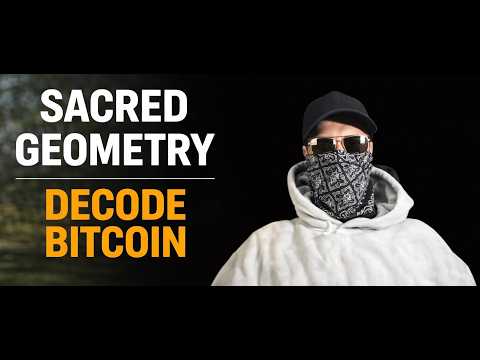
⚡ The Quick Hit — Asanoha Gold
Asanoha is a Bitcoin maximalist, artist, and cypherpunk who describes himself as a "Bitcoin propagandist." He creates striking geometric fine art inspired by sacred geometry and Bitcoin's mathematical structure — prints he calls "fine art of the remnant for your citadel walls."
He is the Art Director of Bitcoin Trading Cards, co-founder of the Bitcoin Art Magazine, and operator of asanoha.gold — a site selling limited edition serigraph prints. He is a fierce advocate for self-custody, privacy, and the cypherpunk values that Bitcoin was built on.
His approach to Bitcoin is not financial — it is philosophical and artistic. He sees Bitcoin as a manifestation of the same sacred mathematical truth that underpins all of reality, and his art is an attempt to make that truth visible.
🔥 The Deep Dive — Asanoha Gold
Art Meets Mathematics
The name "Asanoha" refers to a traditional Japanese hemp leaf pattern — a geometric design built from repeating hexagons that has symbolised growth, resilience, and protection for centuries. It is one of the oldest patterns in Japanese textile art. Choosing it as a name was deliberate: Asanoha sees Bitcoin as something similarly ancient in its truth, simply expressed in a new medium.
His work uses oil-based metallic paints on stretched canvas, with triple-black primer creating depth and contrast. The shapes and patterns he paints — sacred geometry, hexagonal grids, fractal structures — are the same mathematical forms that appear throughout nature: in crystals, honeycombs, shells, galaxies. And in Bitcoin's cryptographic structure. Both sacred geometry and Bitcoin, Asanoha argues, honour the fundamental mathematical truth underlying all life.
The Cypherpunk Path
Asanoha is not just an artist. He is a practising cypherpunk — someone who uses technology to protect individual privacy and freedom. His guide to becoming a cypherpunk has been widely shared: use Bitcoin, run a node, use hardware wallets, use Nostr instead of centralised social media, use a VPN, ditch Gmail for ProtonMail, use Signal, learn PGP encryption, study open-source software. He lives what he preaches.
His focus on self-custody is relentless. For Asanoha, holding your own Bitcoin keys is not just a financial decision — it is a statement of sovereignty. An act of resistance against the centralised systems that seek to monitor, control, and extract value from individuals. He has publicly warned about exchange insolvency and rehypothecation of Bitcoin — the practice of exchanges lending out or betting with the Bitcoin that users believe they own.
Bitcoin Art as Cultural Artefact
Asanoha is building something bigger than a personal art practice. He is Art Director of Bitcoin Trading Cards — a collectible card series where individual cards have sold for as much as $10,000. He co-founded the Bitcoin Art Magazine, a publication dedicated to art created through the lens of Bitcoin culture and values. He operates asanoha.gold, selling limited serigraph prints in editions of 21 — a nod to Bitcoin's 21 million maximum supply.
His most ambitious work is "Seed Cipher #801481" — an archival serigraph where the collector is invited to complete the artwork by using it to build a secure Bitcoin seed phrase with a custom titanium seed plate. The art and the tool are one object. The collector becomes part of the piece. It is Bitcoin and art fused into a single act of sovereign self-custody.
🕳️ The Full Rabbit Hole — Asanoha Gold
Part 1: The Name and the Philosophy
Asanoha — hemp leaf in Japanese — is one of the most enduring patterns in human art. It has been woven into textiles, carved into temple wood, and painted on ceramics for over a thousand years in Japan. It represents strength, growth, and protection. It is built entirely from interlocking equilateral triangles forming perfect hexagons — one of the most efficient and resilient structures in nature, appearing in honeycomb, graphene, and the crystal structure of ice.
Choosing this as his name, Asanoha Gold signals something important: he sees Bitcoin not as a new invention but as a rediscovery of ancient truth. Money has always, at its best, been a reflection of reality — scarce, durable, honest. Gold played this role for millennia. Bitcoin plays it now, with mathematical perfection. His art attempts to make this connection visible: the same geometric laws that structure the natural world also structure Bitcoin's cryptography.
Part 2: From Gold to Bitcoin
The "Gold" in Asanoha Gold is not accidental. His journey began in the world of hard money — the tradition of sound money advocates who saw gold as the ultimate store of value and the antidote to fiat currency's inflation. This is a rich intellectual tradition stretching from Ludwig von Mises and Friedrich Hayek through to modern figures like Peter Schiff and Mike Maloney.
But Asanoha took the path that relatively few gold advocates have taken: he followed the logic all the way to Bitcoin. Gold is scarce — but Bitcoin is more scarce, with a mathematically fixed supply of 21 million that cannot be changed. Gold is hard to transport — Bitcoin moves at the speed of light. Gold is hard to verify — Bitcoin is perfectly verifiable by anyone with a computer. Gold can be confiscated — self-custodied Bitcoin cannot. For a sound money advocate who thinks carefully, Bitcoin is the completion of what gold was trying to be.
Part 3: The Art — Sacred Geometry and Citadel Walls
Asanoha's visual art is arresting. He works primarily with oil-based metallic paints — gold, copper, silver — on stretched canvas with triple-black primer backgrounds. The results are striking: geometric forms that seem to glow against deep darkness. His subjects draw from sacred geometry — the Flower of Life, Metatron's Cube, hexagonal grid structures — patterns that appear across cultures and traditions as representations of fundamental mathematical truth.
He describes his work as "fine art of the remnant for your citadel walls" — a phrase packed with meaning. The "remnant" refers to the minority who see clearly in a world of confusion and propaganda. The "citadel" is a reference to a famous Bitcoin thought experiment: a future scenario where sovereign Bitcoin communities form physical or metaphorical fortresses of financial and personal independence. His art is made for the walls of these citadels — for people who want their home to reflect their values.
Part 4: Bitcoin Trading Cards and the Art Magazine
As Art Director of Bitcoin Trading Cards, Asanoha is part of a project that has turned Bitcoin culture into a collectible card game. The series features art by multiple Bitcoin artists, with individual cards selling for anywhere from a few dollars to $10,000 for rare 1-of-1 pieces. The cards are traded at Bitcoin conferences and online — a physical, tangible piece of Bitcoin culture you can hold in your hand.
The Bitcoin Art Magazine, which he co-founded, takes a similar approach to culture-building — creating a permanent, archival publication that documents and celebrates art made through the lens of Bitcoin values: sovereignty, scarcity, truth, and freedom. In a world of infinite digital reproduction, a physical printed magazine with limited print runs becomes itself a kind of scarce, collectible object. The medium mirrors the message.
Part 5: The Cypherpunk Ethos in Practice
For Asanoha, Bitcoin is inseparable from the broader cypherpunk project: the use of cryptography and technology to protect individual freedom against surveillance and control. He is vocal about privacy tools, self-custody hardware wallets, running your own Bitcoin node, using Nostr (a decentralised social network), and eliminating dependence on corporate platforms like Gmail, Google, and centralised social media.
His warnings about exchange insolvency are particularly relevant for young Bitcoin holders. Exchanges hold your Bitcoin as an IOU — they can lend it, rehypothecate it, and in extreme cases lose it entirely. Asanoha's message to every new Bitcoiner is unambiguous: not your keys, not your coins. The whole point of Bitcoin is that you don't need to trust anyone. Self-custody is not an advanced technique — it is the only way to actually own Bitcoin.
Deep in Bitcoin culture. The philosophy of measuring time in blocks, not years. When you stop counting in fiat time and start counting in block height, everything shifts.
⚡ The Quick Hit — TC Time Chain Calendar
TC is the solo developer behind Timechain Calendar — a Bitcoin protocol visualiser, timechain explorer, and live data dashboard available on web, iOS, and Android. The app reimagines how you track Bitcoin: instead of watching a price chart, you watch the timechain progress block by block.
The core idea is simple but profound: Bitcoin produces a new block approximately every 10 minutes. Each block is a heartbeat of the network. Instead of measuring time in fiat calendar days — a system controlled by governments and institutions — why not measure it in blocks? Block height never lies. It cannot be manipulated. It is pure, objective proof of work.
TC built Timechain Calendar as a solo developer, learning as he went, driven by a simple belief: Bitcoin's mechanics should be beautiful and accessible to anyone. The app visualises halvings, difficulty adjustments, mempool activity, and historical block data in ways no other tool does.
🔥 The Deep Dive — TC Time Chain Calendar
The Problem: Fiat Time is a Lie
We measure our lives in fiat time — years, months, weeks — a calendar system designed and maintained by governments and institutions. This calendar is not neutral. It is used to schedule debt payments, tax deadlines, election cycles, and market hours. It is the temporal infrastructure of the centralised world. When you measure your life in fiat time, you are, without realising it, accepting the frame of a system built to extract value from you.
Bitcoin offers an alternative: block height. Satoshi Nakamoto originally called the Bitcoin ledger not the "blockchain" but the "timechain" — because its primary function is to establish a trustless, verifiable ordering of events over time. Every 10 minutes, a new block is added. The height of the chain — the number of blocks since the genesis block — is the most objective clock in human history. It cannot be forged, manipulated, or paused. It ticks forward as long as the network runs, which is to say: forever.
What Timechain Calendar Does
TC built Timechain Calendar to make Bitcoin's temporal structure visible and beautiful. The app shows you live block data, mempool status, difficulty adjustments, and halving countdowns — not as dry numbers, but as a calendar. A way of marking time in blocks rather than in government-issued dates. You can look up any date and see which block was mined. You can see how many blocks until the next halving. You can watch the network breathe in real time.
TC rebuilt the entire app from scratch for iOS and Android, spending months on design, user experience, and performance. He is a self-taught developer who learned by doing — buying broken hardware, reverse-engineering repairs, and building features based on what the Bitcoin community actually wanted. The app has been featured by major Bitcoin podcasts and has a growing global user base.
Fiat is the Time Thief
TC has spoken about a concept he calls "fiat time theft" — the idea that inflation, debt, and the fiat monetary system effectively steal your time. When your money loses purchasing power every year, you have to work more hours to maintain the same standard of living. The thief is invisible. You never see the moment it happens. You just notice, years later, that everything costs more and your savings have quietly eroded.
Bitcoin fixes this. A fixed supply, predictable issuance schedule, and proof-of-work mining mean that Bitcoin's value cannot be diluted by anyone. When you save in Bitcoin, your time — your human energy converted into work — is preserved. Timechain Calendar makes this tangible by letting you see exactly how the network has progressed, block by block, day by day, halving by halving.
🕳️ The Full Rabbit Hole — TC Time Chain Calendar
Part 1: Satoshi Called It The Timechain
Before Bitcoin was called Bitcoin, before anyone called it a "blockchain," Satoshi Nakamoto's own pre-release code used a different name for the ledger: "timechain." This was not an accident. For Satoshi, the primary function of Bitcoin was not to be a currency — it was to establish a trustless, decentralised record of the ordering of events through time. A clock that no one controlled. A calendar that no government could manipulate.
The "blockchain" framing — which came later, from external commentators — emphasises structure: blocks linked in a chain. The "timechain" framing — which Satoshi preferred — emphasises function: a system for ordering reality in time. In distributed computer systems, the hardest problem is establishing what happened in what order when there is no central authority to be the referee. Bitcoin solves this through proof of work, creating an unforgeable chronological record that anyone can verify independently.
Part 2: Block Height as the Honest Clock
Every Bitcoin block has a height — its position in the chain counting from the genesis block (block zero, mined by Satoshi in January 2009). As of 2025, the chain is over 880,000 blocks tall. Each block represents approximately 10 minutes of the network's heartbeat — though the actual interval varies because mining is probabilistic. What makes block height special as a measure of time is its irreversibility and its objectivity.
Traditional calendar time can be manipulated. Governments change time zones. Daylight saving time distorts the day. Leap seconds are added or removed. Historical records can be forged. Block height cannot. Each block contains the cryptographic fingerprint of every block before it. To change the height or timing of any block would require redoing all the proof of work from that point forward — an impossibility given the network's current hash rate. Block height is the most tamper-proof measurement of the passage of time in human history.
Part 3: The App — Building Bitcoin Time for Everyone
TC started building Timechain Calendar with a personal frustration: every Bitcoin tool he used focused on price. Charts, candles, market cap, 24-hour volume. But price is the least interesting thing about Bitcoin. The network itself — the blocks, the halvings, the difficulty adjustments, the mempool — is a living, breathing organism that operates on its own schedule, indifferent to human markets and emotions.
He wanted a tool that let him experience Bitcoin's time — to check in on the chain the way you might check the weather or the news. To see how many blocks had been mined since yesterday. To watch the next halving approach block by block. To understand difficulty adjustments not as abstract numbers but as the network's metabolism responding to changes in mining power.
The result is Timechain Calendar — available on web, iOS, and Android. It features a calendar-style view of block production, live mempool data, halving countdown, difficulty adjustment tracking, and historical lookups. TC rebuilt the entire mobile app from scratch for the 2025 release, improving design, performance, and educational content throughout. The project earned him a featured slot on Walker America's "THE Bitcoin Podcast."
Part 4: Solo Developer, Self-Taught, Bitcoin-Native
TC is a solo developer. He did not go to a top university computer science programme. He did not work at a FAANG company. He learned by building — buying broken hardware, reverse-engineering how things worked, making mistakes, iterating. This approach mirrors Bitcoin itself: decentralised, independent, proof-of-work. You don't get credit for credentials. You get credit for what you build and ship.
He speaks openly about the role AI has played in his development workflow — not as a replacement for human skill, but as a force multiplier that allows a single determined developer to build things that previously required a team. This is a message with direct relevance for Gen Z: the barriers to building meaningful Bitcoin tools are lower than they have ever been. The tools exist. The knowledge is available. What's required is the will to start and the patience to ship.
Part 5: Why This Matters for You
For Gen Z, who have grown up measuring their lives in notifications, likes, and viral moments — all of which happen on platforms controlled by corporations — the concept of Bitcoin time offers something radical: a measure of time that no company owns. Instagram does not decide how fast the blocks arrive. TikTok cannot pause the halving. The next block will come in approximately 10 minutes regardless of what any government, central bank, or tech company does or says.
TC's invitation — through Timechain Calendar — is to start experiencing time differently. Check the block height when you wake up instead of your social media feed. Watch the halving approach. Notice the difficulty adjustments. Let the rhythm of the network become part of how you measure the passing of your own life. It sounds philosophical. It is. And that is precisely the point.
Mining Bitcoin since 2017. Off-grid, natural gas, proof-of-work as a lifestyle. Founder of Sovereign Mining and co-founder of Midstream. From sending his first cross-border Bitcoin payment to running megawatts of ASICs, HODL Tarantula embodies the spirit of the sovereign Bitcoin pleb.
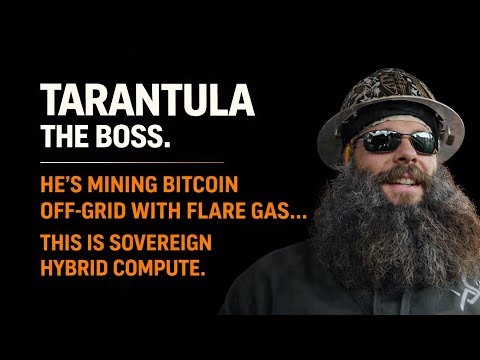
⚡ The Quick Hit — HODL Tarantula
HODL Tarantula is a Bitcoin miner who has been mining since 2017. He is not a data centre miner with institutional backing. He is a sovereign, off-grid miner who takes unused natural gas from abandoned wells in Kentucky and uses it to power Bitcoin mining rigs — turning wasted energy into sound money.
He is the Director of Mining at Sovereign Mining — a company that builds and sells pre-manufactured Bitcoin mining facilities with the tagline "Mine Bitcoin Anywhere!" — and co-founder of Midstream, a Kentucky-based operation that converts stranded natural gas directly into Bitcoin. One site alone was generating $20,000 worth of Bitcoin per month from gas that would otherwise have been wasted.
His message is simple: Bitcoin mining is proof-of-work as a lifestyle. You find energy nobody wants. You convert it into the hardest money ever created. You take self-custody. You answer to nobody.
🔥 The Deep Dive — HODL Tarantula
What is Stranded Energy Mining?
When oil companies drill for oil, they often encounter natural gas as a byproduct. In remote locations, there is no pipeline to transport this gas to market. Traditionally, companies would simply burn it off — a process called "flaring" — releasing CO2 into the atmosphere with zero economic benefit. Tarantula saw an opportunity: instead of flaring gas, use it to generate electricity on-site, and use that electricity to mine Bitcoin.
He deploys generators at these remote well sites — typically half a megawatt or one megawatt — connects them to Bitcoin mining rigs housed in containers, and mines around the clock. The gas that would have been wasted becomes Bitcoin. The miners run off-grid, no utility company involved, no grid fees, no regulatory choke points. Pure sovereign energy capture.
The Economics
Tarantula has described individual well sites generating $20,000 per month in Bitcoin. His company Midstream claims to extract 10x more value from natural gas through Bitcoin mining than by selling the gas directly. This is because the gas at remote sites is essentially worthless without infrastructure to transport it — but electricity generated on-site is instantly valuable for mining. Bitcoin turns stranded, unmarketable energy into globally fungible, instantly transferable value.
Sovereign Mining — The Philosophy
Tarantula is fiercely committed to Bitcoin's decentralisation. He has publicly refused to build infrastructure for large public mining companies that he believes prioritise shareholder value over Bitcoin's long-term health. He supports home miners and small operators. He is suspicious of regulated, institutional miners who could become enforcement targets for governments wanting to control Bitcoin's hash rate.
His warnings about self-custody are legendary on Bitcoin Twitter. He has publicly warned that exchanges are rehypothecating Bitcoin — using customer deposits as collateral or lending them out — meaning the Bitcoin you think you own on an exchange may not actually be there. His message is identical to Asanoha's: not your keys, not your coins.
🕳️ The Full Rabbit Hole — HODL Tarantula
Part 1: How He Got Here
HODL Tarantula came to Bitcoin mining through a combination of industrial automation experience and a conviction that Bitcoin was important. His background in three-phase power systems, firmware, load balancing, and logistics robotics gave him the technical toolkit to look at a Bitcoin mining rig and understand it instinctively — as hardware that needed power management, cooling, and maintenance, not magic internet money boxes.
He started small — buying broken mining hardware, teaching himself to repair it, learning the economics of electricity arbitrage. His early payment experiences with Bitcoin across borders convinced him this was not just an investment. This was genuinely new money. The kind that couldn't be stopped, censored, or devalued. He went deeper.
Part 2: The Stranded Gas Discovery
The insight that changed everything was simple: electricity costs are the primary variable in Bitcoin mining profitability. If you can get electricity cheaper than anyone else, you win. And there is no electricity cheaper than electricity generated from fuel that is literally free — gas that would otherwise be burned off at a wellhead in southeast Kentucky with no economic return to anyone.
Tarantula began deploying generators and mining rigs at these abandoned or stranded well sites. The operation is multi-trade heavy industry — you need skills in gas handling, generator maintenance, electrical systems, networking, and ASIC repair all at once. There is no manual. You learn in the field. This suited Tarantula perfectly. He thrives in exactly the kind of environment where knowledge is earned through doing, not credentialing.
Part 3: Sovereign Mining and Midstream
As Director of Mining at Sovereign Mining, Tarantula works with clients who want to monetise their own stranded energy — oil and gas producers, landowners with methane resources, industrial operations with waste heat or unused gas. Sovereign Mining provides the infrastructure: pre-manufactured container-based mining facilities that can be deployed anywhere there is an energy source.
Midstream, the company he co-founded, takes a direct approach: instead of selling the natural gas at wellheads, they use it to power mining equipment on-site. The company's Big Rig — a 300-kilowatt mining array designed for natural gas sites — became a product that let individual landowners become Bitcoin miners with minimal operational complexity. The tag line says it all: instead of selling gas for cents on the dollar, use it to mine Bitcoin and extract ten times the value.
Part 4: The Decentralisation Imperative
Tarantula is one of the most outspoken voices on the need for Bitcoin mining to remain decentralised. He understands better than most what happens when mining becomes concentrated: it becomes an enforcement target. Governments that want to attack Bitcoin will start with the largest, most visible, most regulated miners. Public companies listed on stock exchanges. Big data centres with known addresses and identifiable ownership.
Off-grid, anonymous, distributed mining — the kind Tarantula practices and teaches — is Bitcoin's immune system. Thousands of small operators scattered across remote locations, using energy sources that nobody else wants, running rigs that can be moved or shut down quickly. No single point of failure. No target for regulators. This is proof-of-work as it was designed to function: permissionless, borderless, unstoppable.
Part 5: Sovereign Compute — The Next Frontier
In 2025 and 2026, Tarantula has been developing a new concept: sovereign hybrid compute. The idea is to take the off-grid mining infrastructure — generators, containers, power management systems — and add privacy-focused data storage, VPN services, and AI compute capacity, all paid for in Bitcoin. Instead of relying on Amazon Web Services, Google Cloud, or Microsoft Azure — centralised companies that log your data, comply with government requests, and can terminate your account at any time — users would pay in Bitcoin for compute services hosted on physically sovereign, off-grid infrastructure.
This vision connects directly to the cypherpunk project: not just sovereign money, but sovereign infrastructure. If the internet runs on servers controlled by three or four corporations who answer to governments, then freedom of communication is always one court order away from being shut down. Tarantula's answer is to rebuild critical internet services on infrastructure that is geographically distributed, economically aligned with users through Bitcoin payments, and deliberately designed to make surveillance and control as difficult as possible.
Co-founder of AmityAge. On a mission to welcome 100 million people into the Bitcoin rabbit hole by 2030. Mines Bitcoin in Paraguay to fund education in Honduras, Ethiopia and beyond. Creator of the Bitcoin Educators Academy and Amity Nakamoto — Satoshi's granddaughter.
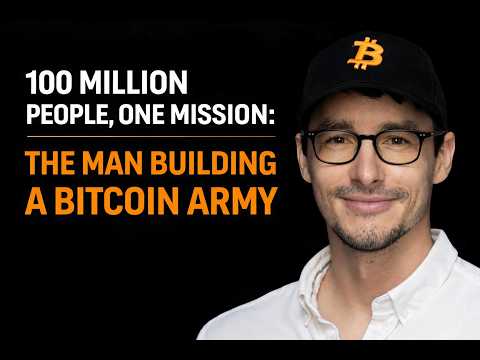
⚡ The Quick Hit — Dusan Matuska
Dusan Matuska is a Slovakian Bitcoin educator on a mission to welcome 100 million people into the Bitcoin rabbit hole by 2030. He is the co-founder of AmityAge — a Bitcoin education organisation operating across Honduras, Paraguay, Ethiopia, and beyond — and founder of the AmityAge Bitcoin Center in Prospera, Roatán, Honduras.
He has been teaching Bitcoin since 2018, when he gave his first workshop to 40 people in Slovakia. Since then he has delivered over 10 cohorts of his Bitcoin Diploma, graduating approximately 200 students. But his ambition goes far beyond that — his model is to train 10,000 Bitcoin educators, each of whom teaches 10,000 people, reaching 100 million total.
He mines Bitcoin in Paraguay using surplus hydroelectric power — energy that would otherwise go to waste — and reinvests those mining profits directly into education. He describes himself as someone who wants to "separate money and state." He believes Bitcoin can bring humanity to "an age of cooperation, fellowship and harmony."
🔥 The Deep Dive — Dusan Matuska
From China To Slovakia To Honduras
Dusan Matuska's journey is one of the most unusual in Bitcoin. At 23, he was already one of the best business administration students in China, where he founded Octago — a fitness park startup that became a media success. Then he discovered Bitcoin. He describes it as one of the loves of his life. He stopped everything else, gave his first Bitcoin workshop in Slovakia in 2018, and never looked back. When he heard about Roatán, Honduras — a Caribbean island with a special economic zone called Prospera — he flew there to visit. He attended the Build Prospera Summit 2022 and spontaneously pitched an idea at the closing competition: a Bitcoin Education Center. He won. AmityAge Academy opened on Roatán on November 18, 2022.
The AmityAge Model
AmityAge is built on a beautiful circular economy: mine Bitcoin using surplus energy, sell the Bitcoin, use the proceeds to fund education. In Paraguay, Dusan partnered with local miners to access surplus hydroelectric power — electricity that the country generates in excess of what it can use or export. He compares it to a bakery: "Imagine you're a baker, and every evening, you have 20 croissants left. You either throw them out or give them away. But what if someone offers to buy those extra croissants for five cents each?" The mining profits fund workshops, teaching materials, and the growing academy network.
Amity Nakamoto — Satoshi's Granddaughter
For younger learners, AmityAge uses a fictional character called Amity Nakamoto — described as "Satoshi's granddaughter." She is the project's mascot, representing the next generation and acting as a friendly guide into Bitcoin's ideas. Through playful animations, books like the Tuttle Twins, and storytelling about inflation and scarcity, AmityAge makes Bitcoin accessible to children who have never heard of it. Dusan believes that reaching young people before they are fully captured by the fiat system is the highest-leverage education possible.
The 100 Million Mission
Dusan's goal is audacious: educate 100 million people about Bitcoin by 2030. His strategy is decentralised — mirroring Bitcoin itself. Rather than building one big institution, he wants to enable 10,000 Bitcoin educators globally, each reaching 10,000 people. His Bitcoin Educators Academy trains passionate people to go back to their communities and teach. As of early 2026, he has already run over 10 cohorts and graduated around 200 students. He has spoken at major Bitcoin conferences including Adopting Bitcoin in El Salvador and BTC Prague, and has been featured in media from TheCryptoRadio to CoinDesk.
🕳️ The Full Rabbit Hole — Dusan Matuska
Part 1: The Accidental Bitcoiner
Dusan Matuska did not set out to become a Bitcoin educator. He was a high-achiever moving fast through the conventional world — business administration in China, a startup at 23, media attention. He was good at systems, good at teaching, and good at spotting opportunities that others missed. When he discovered Bitcoin, he recognised all three of those qualities in it simultaneously. A system unlike any other. A subject worth teaching. An opportunity that was not yet obvious to most of the world. He gave his first Bitcoin workshop in Slovakia in 2018 to 40 people. He describes that moment as the beginning of his real life's work.
Part 2: Mining As A Means, Not An End
When most people think of Bitcoin mining, they think of profit. For Dusan, mining is infrastructure for education. His mining operations in Paraguay — using surplus hydroelectric power from plants that export over 40% of their electricity and still have excess — generate Bitcoin that is then spent on workshops, materials, scholarships, and the academy network. This is not an unusual business model in the Bitcoin world. But the intentional reinvestment into education rather than personal accumulation sets Dusan apart. He is building something that outlasts him.
Part 3: Roatán — The Bitcoin Island Dream
The island of Roatán, Honduras is not an obvious place to build a global Bitcoin education network. It's a small Caribbean island, better known for scuba diving than financial revolution. But Dusan saw something others didn't: Prospera, a special economic zone on the island with its own legal system, low taxes, and an explicit mandate to attract innovative projects. He pitched AmityAge Academy at the Build Prospera Summit in April 2022. His pitch was simple: a Bitcoin Education Center with the goal of educating 100 million people about Bitcoin by 2030. He won the pitch competition. By November 2022, the academy was open, complete with Roatán's first Bitcoin ATM — a two-way machine, Lightning-compatible, accepting USD and Lempira starting from just $1.
Part 4: Teaching Bitcoin Without Saying Bitcoin
One of the most interesting challenges Dusan faces is introducing Bitcoin to communities — schools, churches, community groups — that are suspicious of it. His solution is elegant: start with financial literacy and monetary history. Teach people what money is, how it has evolved, what inflation means, and how central banks work. By the time you explain those concepts honestly, Bitcoin explains itself. "Sometimes schools are afraid it'll be Bitcoin propaganda," he has said. "So we tell them, we can just teach financial literacy and the history of money if you prefer." By the end, the students understand why Bitcoin matters — without ever being sold to.
Part 5: Miners4Kids
In August 2024, Dusan launched one of the most creative Bitcoin education experiments in the world: Miners4Kids. The concept is simple and powerful. AmityAge connected one of its Bitcoin miners in Paraguay directly to a wallet controlled by a group of children on Roatán. The miner mines Bitcoin. The Bitcoin goes to the kids. For their education efforts. Dusan tweeted about it in August 2024: "Kids on Roatan just received 775,778 sats (~$460) for their education efforts." This is not a metaphor for the future. This is children earning real Bitcoin for real learning, right now.
Part 6: The Presidential Cap And The Honduran Future
In January 2026, Dusan posted a photo that went viral in the Bitcoin community: a top Honduran presidential candidate spotted wearing an AmityAge Bitcoin cap. The caption asked: "Could he become the Nayib Bukele of Honduras in 2025?" This is not wishful thinking — it's the result of years of grassroots work, building community relationships, educating locals, onboarding businesses, and making Bitcoin visible and trusted on the island. Dusan has built the cultural foundation. The political infrastructure may follow.
Part 7: Why Gen Z?
Dusan is one of the few Bitcoin educators who genuinely focuses on young people — not because they're the easiest audience, but because they're the most important one. Gen Z will inherit a financial system in collapse. They will live through the consequences of decades of money printing. But they will also live long enough to see Bitcoin become the global monetary standard — if they understand it in time. Dusan's work in Honduras, Paraguay, and Ethiopia is building the educational infrastructure that gives young people a fighting chance. Orange Pill Order and AmityAge share exactly this mission.
Former Editor-in-Chief at Swan Bitcoin. Author of the free book "Why Bitcoin." Host of "For The Love Of Bitcoin" podcast. 25 years in digital media and private equity turned full-time Bitcoin philosopher. His writing has reached millions.
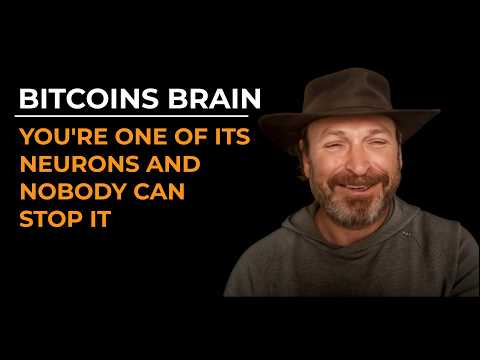
⚡ The Quick Hit — Tomer Strolight
Tomer Strolight is a Canadian Bitcoin philosopher, writer, and speaker with over 70,000 followers on X. He spent 25 years running companies in digital media and private equity before Bitcoin rewired his brain. He holds a BBA and MBA from Toronto's Schulich School of Business.
He became Editor-in-Chief at Swan Bitcoin and wrote "Why Bitcoin" — a collection of 25 short essays that explain Bitcoin from every angle, designed so a total beginner can read them in 2-4 minutes each. The book is free.
What makes Tomer unique is that he doesn't talk about price. He writes about Bitcoin as a moral philosophy — truth, patience, freedom, honest work. He argues that Bitcoin is a "test" that reveals who you really are.
🔥 The Deep Dive — Tomer Strolight
The Man Behind The Words
Tomer Strolight doesn't look like your typical Bitcoin personality. He's a Canadian businessman who spent 25 years building and running companies in digital media and private equity — Torstar, Workopolis, Olive Media, IAB Canada, and more. He has both a BBA and MBA from York University's prestigious Schulich School of Business. By any standard, he'd already "made it" in the traditional world. Then Bitcoin happened.
The Writing That Changed Everything
In February 2021, Tomer started writing short philosophical essays about WHY Bitcoin matters. Each one just 2-4 minutes long. He called it the "Why Bitcoin" series — and it exploded. 25 essays downloadable as a free ebook. Topics range from why Bitcoin uses energy, to why nobody can stop it, to why it's not actually volatile.
Bitcoin As A Test — And A Mirror
Tomer's most famous essay is "Bitcoin Is A Test." The idea: Bitcoin tests your curiosity, intelligence, patience, character, honesty, courage, and ability to distinguish truth from lies. Then it shows you the results. He calls Bitcoin a "mirror" — the more you look into it, the more it shows you about yourself.
Generational Wealth And The Film
Tomer wrote the screenplay for "Bitcoin Is Generational Wealth" — produced by Swan Bitcoin, Bitcoin Magazine, and MicroStrategy. The film argues Bitcoin is the first money that's "un-fall-able." For the first time, humans can build wealth that lasts across not just one lifetime, but many generations.
🕳️ The Full Rabbit Hole — Tomer Strolight
Part 1: Before Bitcoin — A Life In Business
To understand Tomer Strolight, you first need to understand what he walked away from. This isn't some 22-year-old crypto bro who stumbled into Bitcoin on Reddit. Tomer is a serious businessman with 25 years of operating experience across digital media and private equity in Canada. He earned both a BBA and MBA from York University's Schulich School of Business. His career spans Torstar, Workopolis, Olive Media, IAB Canada, and more. He sat on boards. He ran companies. He built things in the real world. By all conventional measures, Tomer had won the game.
Part 2: The Orange Pill Moment
Something clicked for Tomer — not just intellectually, but morally. He saw in Bitcoin not just better money, but a better philosophy for living. A framework for truth in a world full of lies. His LinkedIn bio describes him as a "Bitcoin student, teacher, philosopher, writer, evangelist, activist, author, and speaker." Note the word "student" comes first — a man who leads with humility.
Part 3: The Why Bitcoin Series
"Why Bitcoin Is Honest Money" — Since it takes your time and energy to earn money honestly, and Bitcoin is honest money, it takes time and energy to make bitcoins. This is foundational: Bitcoin requires real work, unlike fiat which can be printed from nothing.
"Why Bitcoin Is Not Volatile" — Bitcoin is actually extremely stable in what it does. Its rules never change, its supply is perfectly predictable, it operates 24/7. What people call "volatility" is the world repricing itself relative to the most stable thing that exists.
"Why You Haven't Missed The Boat" — Directly addresses the most common excuse people use to dismiss Bitcoin: "I'm too late."
Part 4: Sovereign, Yet Civilised
Before Bitcoin, if you wanted sovereignty you had to remove yourself from society entirely. Bitcoin changes this. It allows sovereign individuals to connect and trade with each other, in peace, apart from the currencies controlled by rulers. Bitcoin cannot be produced without effort, nor seized by force. Bitcoin is, as Tomer puts it, "currency for the free people of Earth."
Part 5: Bitcoinism — A New Philosophy
Tomer describes Bitcoin as carrying a philosophy embedded in its code — "Bitcoinism" — with five branches: Reality (connection to the physical world), Truth (honesty built into every transaction), Patience (low time preference), Work (proof of genuine effort), and Freedom (respect for individual rights). Together, a complete moral framework for a new civilisation.
Serial entrepreneur and Bitcoin educator. Creator of Based Trading Cards (formerly Bitcoin Trading Cards) — the world's first physical Bitcoin-only collectible trading card company. Each card is an education tool designed to orange pill the masses. Also founder of The Bitcoin Life Raft, a Bitcoin consulting company. Started his first business at 17 and discovered Bitcoin in 2016.
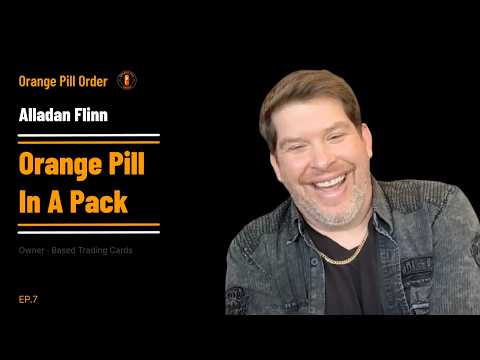
⚡ The Quick Hit — Alladan Flinn
Alladan Flinn is the creator of Based Trading Cards — formerly Bitcoin Trading Cards — the world's first physical Bitcoin-only collectible trading card company. Every card is designed to educate people about Bitcoin. Think of it as an orange pill you can hold in your hand.
His flagship product is called "Orange Pill in a Pack" (OPP), capped at 21,000 packs per series — a nod to Bitcoin's 21 million hard cap. Cards have been created in partnership with Bitcoin legends including Michael Saylor, Adam Back, Alex Gladstein, Greg Foss, Max Keiser, and Tone Vays.
He also founded The Bitcoin Life Raft — a consulting company that helps people understand and adopt Bitcoin. His mission: use art, culture, and collectibles to bring Bitcoin education to the masses.
🔥 The Deep Dive — Alladan Flinn
The Serial Entrepreneur
Alladan grew up in a small farming town in Northern California. He started his first business at age 17 — a record label called "Home Grown Records." From there he moved through real estate, retail, and the legal cannabis industry, building businesses and learning the hard way what it means to create something from nothing.
In 2016, he discovered Bitcoin. Like many entrepreneurs, he saw immediately that this was not just another investment. This was a paradigm shift. He founded The Bitcoin Life Raft — a consulting company designed to help people navigate the transition from fiat to Bitcoin — and began his journey deeper into the rabbit hole.
The Birth of Bitcoin Trading Cards
Alladan realised that education is the bottleneck. Most people do not read white papers or watch three-hour podcasts. But everyone understands collectibles. Everyone understands art. He combined his entrepreneurial instinct with his passion for Bitcoin education and created Bitcoin Trading Cards — physical, collectible cards that each teach a lesson about Bitcoin.
The first collection debuted at the Pacific Bitcoin Conference in Santa Monica in November 2022. The cards received PSA accreditation for grading, plus approval from CGC, Beckett, TAG, and other major grading authorities. They are real collectibles with real secondary market value — a Silk Road Founder Card sold for 0.41 BTC, and an OPP Series 1 box sold for 0.27 BTC (approximately $29,000 at the time).
Orange Pill in a Pack
The flagship product — Orange Pill in a Pack (OPP) — is capped at 21,000 packs per series. That number is not random. It mirrors Bitcoin's 21 million supply cap. Each pack contains cards featuring Bitcoin legends, educational content, and artwork designed to spark curiosity. The idea is simple: hand someone a pack of trading cards and watch them fall down the rabbit hole.
🕳️ The Full Rabbit Hole — Alladan Flinn
Part 1: Small Town to Serial Entrepreneur
Alladan Flinn grew up in a small farming town in Northern California. He is a husband and father of three. The entrepreneurial spirit hit early — at 17 he launched Home Grown Records, a record label. It was not a massive commercial success, but it taught him the fundamentals: create something, market it, sell it, learn from the failures. That mindset carried through every venture that followed.
He moved through real estate, retail, and the legal cannabis industry — each time building from scratch, each time learning new skills. By the time Bitcoin entered his life in 2016, he had a decade of entrepreneurial experience and the most important skill of all: the ability to recognise when something is genuinely new and important, and to go all in.
Part 2: The Bitcoin Life Raft
When Alladan discovered Bitcoin, he did not just buy some and wait. He founded The Bitcoin Life Raft — a consulting company with a mission to help regular people understand what Bitcoin is, why it matters, and how to use it. The name says everything: in a world of sinking fiat currencies, inflation, and financial uncertainty, Bitcoin is the life raft. Alladan's job is to throw it to as many people as possible.
Through The Bitcoin Life Raft, he worked with individuals and small businesses, helping them navigate self-custody, Lightning payments, and the philosophical shift from fiat thinking to Bitcoin thinking. It was this hands-on education work that revealed the core problem: most people do not learn about Bitcoin through technical explanations. They learn through stories, culture, and tangible objects.
Part 3: Bitcoin Trading Cards — The Innovation
The insight was deceptively simple: trading cards are one of the most successful educational and cultural products in history. Pokémon taught an entire generation about strategy and collecting. Sports cards teach statistics and history. Why not Bitcoin? Each card could feature a Bitcoin legend, a concept, a piece of history — and the act of collecting, trading, and discussing them would naturally spread Bitcoin education.
Bitcoin Trading Cards launched at the Pacific Bitcoin Conference in Santa Monica in November 2022. The response was immediate. The cards received professional grading accreditation from PSA, CGC, Beckett, and TAG — placing them alongside legitimate sports and Pokémon cards in the collectibles market. This was not a gimmick. These were real, professionally produced collectibles with genuine secondary market value.
Part 4: The Legends on the Cards
Alladan partnered with some of the biggest names in Bitcoin to create the card series. Michael Saylor, Adam Back, Alex Gladstein, Greg Foss, Max Keiser, Tone Vays — each featured on their own card with artwork, biographical information, and educational content about their contribution to Bitcoin. Collaborations with Bitcoin Magazine further legitimised the project.
The secondary market told its own story. A Silk Road Founder Card sold for 0.41 BTC. An OPP Series 1 box sold for 0.27 BTC — approximately $29,000 at the time. These prices proved that the market saw real value in the project, not just as novelty items but as genuine Bitcoin cultural artefacts.
Part 5: Based Trading Cards — The Evolution
In October 2025, Bitcoin Trading Cards rebranded to Based Trading Cards. The rebrand reflected an evolution in vision — not just Bitcoin cards, but a broader cultural movement. The core mission remained the same: use physical, tangible, collectible art to educate people about Bitcoin and sound money principles. The 21,000-pack cap per series remained. The grading accreditations remained. The partnerships with Bitcoin legends remained.
What changed was the ambition. Based Trading Cards is not just a product — it is a cultural project. In a world where most Bitcoin education happens through screens, Alladan created something you can hold, trade, collect, and share. Something that sits on your desk and reminds you every day why you fell down the rabbit hole. An orange pill you can hold in your hand.
Host of the Once Bitten podcast — 600+ episodes and one of the longest-running Bitcoin-only shows in the world. Former forex broker turned Bitcoin maximalist. Quit an 18-year finance career to travel the world with his wife and four kids. Author of "Choose Life." Advisor to Orange Pill App. A man who got red-pilled on fiat money, fiat education, and fiat food — and never looked back.

⚡ The Quick Hit — Daniel Prince
Daniel Prince is a British Bitcoin maximalist, podcaster, author, and father of four. He spent 18 years working in forex brokerage houses in Singapore before quitting the finance industry entirely. He and his wife Clair pulled their children out of school, left their life behind, and began travelling the world full-time — worldschooling their kids as they went.
He is the host of Once Bitten — one of the longest-running and most prolific Bitcoin-only podcasts in existence, with over 600 episodes. His guest list includes Michael Saylor, Saifedean Ammous, Jeff Booth, and hundreds of Bitcoiners from every walk of life. Every episode ends with his signature question: "If you had one orange pill left to give, who would it be and why?"
He describes his awakening as getting "red-pilled" on three things simultaneously: fiat money, fiat education, and fiat food. He wrote a book called "Choose Life" about escaping the corporate treadmill, and has become one of the most recognised voices in Bitcoin advocating for family sovereignty, unschooling, and living on your own terms.
🔥 The Deep Dive — Daniel Prince
The Finance Insider
Before Bitcoin, Daniel Prince spent over 18 years in the financial trenches — specifically in voice brokerage houses in Singapore's foreign exchange markets. He built a Crude Palm Oil Swaps desk from scratch at a leading firm, which became one of the most respected desks in the edible oil industry across Southeast Asia. He knew the financial system from the inside. He understood how money moved, how markets were made, and how the game was played. And the more he understood it, the less he trusted it.
The Great Escape
In 2014, Daniel and his wife Clair made a decision that most people only fantasise about. They quit. Not just the job — the entire lifestyle. They pulled their four children out of traditional schooling, left Singapore, and began travelling the world full-time using the sharing economy and home-swapping. Their family blog "Princes Off The Grid" gained international press attention and Daniel wrote a book about it — "Choose Life" — comparing the typical working life to King Sisyphus endlessly rolling a boulder uphill. The book was not about Bitcoin. It was about freedom. But it laid the philosophical foundation for everything that came next.
Once Bitten — Building The Microphone
When Daniel launched Once Bitten, Bitcoin-only podcasts were rare. Most crypto media was dominated by altcoin noise, sponsored content, and hype cycles. Daniel took a different approach. He focused exclusively on Bitcoin and, more importantly, on the human stories behind it. His show became a space where Bitcoiners — from billionaires like Saylor to farmers selling beef for sats — could share how Bitcoin had genuinely changed their lives. Over 600 episodes later, Once Bitten is one of the most prolific Bitcoin podcasts ever created. His signature closing question has become a ritual in the Bitcoin podcasting world.
The Three Red Pills
What makes Daniel unusual in the Bitcoin space is that he does not limit his critique to money. He describes getting red-pilled on three interconnected systems: fiat money (the obvious one), fiat education (state-controlled schooling designed to produce compliant workers rather than free thinkers), and fiat food (industrialised food systems that prioritise profit over health). He appeared twice on Saifedean Ammous's Bitcoin Standard Podcast specifically to discuss fiat education — referencing how the modern school system was designed not to educate but to create obedient factory workers. His children have never been inside a traditional school. They are worldschooled — learning through travel, experience, and curiosity rather than curricula.
🕳️ The Full Rabbit Hole — Daniel Prince
Part 1: The Trading Floor Years
Daniel Prince did not drift into Bitcoin from the sidelines. He came from the belly of the beast. For over 18 years he worked in voice brokerage houses in Singapore — the kind of high-stakes, fast-paced dealing rooms where foreign exchange trades are executed over the phone and relationships are worth more than algorithms. He was good at it. He built a Crude Palm Oil Swaps desk from scratch at Tropical Oil Products, a member of Charleston Holdings, and turned it into one of the most respected desks in the edible oil industry across Southeast Asia. He understood commodity markets, currency markets, and the invisible plumbing that moves the global financial system. But understanding the system from the inside is what eventually made him want to leave it.
Part 2: Choosing Life
In 2014, Daniel and his wife Clair did what most people in finance talk about doing at retirement age — except they did it in their thirties, with four young children. They quit everything. The job. The apartment. The school run. The entire structure of conventional life. They began travelling the world full-time, using the sharing economy and home-swapping to move from country to country with their kids. It was not a holiday. It was a philosophical declaration: the typical life — commute, work, consume, repeat — was not worth living. Daniel wrote about it in "Choose Life," a book that compares the conventional working life to the myth of King Sisyphus, condemned to roll a boulder uphill for eternity. The book became a manifesto for a growing community of families who were questioning the same things. Their blog "Princes Off The Grid" attracted international press coverage and inspired other families to take the leap.
Part 3: The Education Revolution
Before Daniel became known as a Bitcoin podcaster, he was already deeply embedded in the alternative education movement. He hosted the InspirEd Podcast, which featured thought leaders challenging conventional education. He organised the Homeschool Global Summits in 2019 and 2020, bringing together unschoolers, worldschoolers, and education disruptors from around the world. His children have never attended a traditional school. They learn through travel, through curiosity, through the real world rather than a classroom. When Daniel appeared on The Bitcoin Standard Podcast with Saifedean Ammous, they spent two full episodes discussing how the modern education system was designed not to cultivate independent thinkers but to produce compliant workers for the industrial economy. Daniel referenced a forgotten 1917 text that laid bare the true purpose of state-controlled schooling. For him, unschooling is not an alternative lifestyle — it is the logical extension of the Bitcoin ethos. If you reject centralised control of money, why would you accept centralised control of your children's minds?
Part 4: Once Bitten — 600 Episodes And Counting
Once Bitten launched as a Bitcoin-only podcast at a time when the space was drowning in altcoin noise. Daniel made a deliberate choice: no shitcoins, no sponsors dictating content, no compromise. The show would be about Bitcoin and the people whose lives it had changed. Over 600 episodes later, the guest list reads like a who's who of Bitcoin. Michael Saylor has appeared multiple times. Saifedean Ammous. Jeff Booth. Daniel Batten on environmental mining. Simon Dixon. Nelson Inno from El Salvador discussing Bitcoin Diploma 2.0 for public schools. Farmers selling beef for Bitcoin. Artists. Miners. Educators. Activists. The show covers education, mining, entrepreneurship, adoption, family, freedom, art, and culture. But the thread that runs through every episode is the same: how does Bitcoin change lives? And every single episode ends with the same question — Daniel's signature: "If you had one orange pill left to give, who would it be and why?" It has become one of the most recognisable rituals in Bitcoin podcasting.
Part 5: Fiat Money, Fiat Education, Fiat Food
Daniel Prince's philosophy goes deeper than most Bitcoiners are willing to go. He does not just critique the monetary system. He sees three interconnected pillars of control: fiat money (centralised currency that allows governments to steal purchasing power through inflation), fiat education (a schooling system designed to produce obedient workers, not sovereign individuals), and fiat food (an industrialised food supply that prioritises shelf life and profit over human health). His argument is that these three systems reinforce each other. The money system funds the education system. The education system produces people who do not question the money system. And the food system keeps everyone too unhealthy and distracted to fight back. Bitcoin, for Daniel, is the crack in the wall. Once you understand that your money has been debased, you start questioning everything else. That is the real orange pill — not just a monetary awakening, but a total philosophical recalibration.
Part 6: The Community Builder
Daniel is not just a talker. He is an active community builder in the Bitcoin space. He was an early advisor to the Orange Pill App (now rebranded as Club Orange), a platform designed to help Bitcoiners find each other in person and build local communities. He has moderated panels on grassroots Bitcoin community building at BTC Prague. He promotes and supports BitFest Manchester and other regional Bitcoin events. He advises and invests in startup companies looking to disrupt legacy business practices with Bitcoin-native thinking. His approach is bottom-up, not top-down — exactly mirroring the architecture of Bitcoin itself. He believes that the revolution will not come from institutions adopting Bitcoin, but from families, communities, and individuals choosing to opt out of the fiat system, one by one.
Part 7: Why OPO?
Daniel Prince represents everything Orange Pill Order stands for. He is living proof that you can leave the system and build something better. He quit a lucrative career. He pulled his kids out of school. He rejected the conventional path. And he built a platform — Once Bitten — that has orange-pilled thousands of people over 600+ episodes. His signature question is literally about orange-pilling. His advisory work is about orange-pilling. His family life is a walking demonstration that there is another way. He is a proud Bitcoin dad, a relentless podcaster, and a man who believes that if you fix the money, you fix the world — but you also have to fix the education system and the food system at the same time. For Gen Z listeners discovering Bitcoin for the first time, Daniel Prince is proof that the rabbit hole goes much deeper than money.
Irish-born, Australian-raised, now living in El Salvador. Founder of BitTasker — a Nostr-based freelancing platform where you hire talent and get paid in Bitcoin. Also founder of Solaris Healthcare. A 25-year yogic practitioner who walks the Jaguar Path. Turned down venture capital on principle. His mantra #MustDeploy is a rallying cry for Bitcoiners to stop just holding and start building. 90% of BitTasker users are Salvadoran locals — proof that Bitcoin adoption is real.
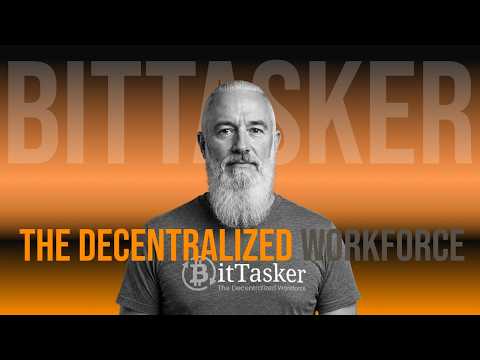
⚡ The Quick Hit — Jon Byrne
Jon Byrne is an Irish-born entrepreneur who spent years in Australia before moving to El Salvador — not for the beach, but for the freedom. He is the founder of BitTasker, a decentralised freelancing platform built on Bitcoin and Nostr where anyone in the world can hire talent and pay in sats. Think Fiverr, but sovereign. No middlemen taking 20%. No banks freezing payments. Just peer-to-peer work, powered by Bitcoin.
He is also the founder of Solaris Healthcare, a holistic health ecosystem in El Salvador, and has been a yogic practitioner for 25 years. He walks what he calls the Jaguar Path — the way of inner power and awakened service. His co-founder Scott Meehan previously worked at Netflix, Dropbox, GitHub, and Stack Overflow. Together they built BitTasker without taking a single dollar of venture capital, because sovereignty means independence from centralised financial powers.
The stat that defines BitTasker: approximately 90% of its users are Salvadoran locals. Not tourists. Not tech bros. Real people using Bitcoin to work, earn, and build a life. Jon's mantra is #MustDeploy — a rallying cry that Bitcoin is not about waiting for number go up. It is about building, deploying, and creating the sovereign infrastructure the world needs.
🔥 The Deep Dive — Jon Byrne
Ireland to Australia to a Volcano
Jon Byrne grew up in Ireland and later moved to Australia, where he spent years building businesses and watching the surveillance state tighten around him. Digital ID mandates, KYC requirements for social media, ever-expanding government control over personal data. He watched it creep in, quietly at first, then not so quietly. And rather than accept it, he left. He moved to El Salvador — a country that had gone from being known for gang violence to becoming the world's most ambitious experiment in Bitcoin adoption under President Nayib Bukele. Jon did not go for the beach. He went for the freedom.
BitTasker — Fiverr on Bitcoin
BitTasker is a freelancing platform built on Bitcoin and the Nostr protocol. If you have ever used Fiverr or Upwork, the concept is familiar: someone has a task, someone else has the skill to do it, they connect, work gets done, payment is made. But everything underneath is different. Identity runs on Nostr — a decentralised protocol built on Bitcoin's cryptographic foundation that requires no permission from central authorities. Smart contracts run on Rootstock, a Bitcoin sidechain that provides trustless escrow so neither party has to trust the other. Payments flow over Lightning for instant settlement, and Boltz handles trustless swaps between Bitcoin layers. There is no company sitting in the middle taking 20% of every transaction. There is no bank that can freeze your account. There is no centralised platform that can deplatform you.
90% Salvadoran
The stat that separates BitTasker from every other Bitcoin project claiming to help developing countries: approximately 90% of BitTasker's users are Salvadoran locals. Not crypto tourists passing through. Not remote workers from Europe or America using El Salvador as a tax haven. Actual Salvadorans — using Bitcoin to find work, complete tasks, and earn a living. This completely dismantles the narrative that Bitcoin in El Salvador is just a Bukele PR stunt or a playground for privileged Westerners. BitTasker is proof that real, grassroots adoption is happening — and it is being built by people like Jon, not by governments or corporations.
No VCs. No Compromise.
Jon and his co-founder Scott Meehan made a deliberate decision early on: no venture capital. Scott is no startup amateur — he previously worked at Netflix, Dropbox, GitHub, and Stack Overflow. He could have raised millions with a single pitch deck. Instead, they chose to remain privately financed and independent. For Jon, this was not a business decision but a philosophical one. If you are building sovereign technology — tools designed to free people from centralised control — you cannot fund it with centralised capital that comes with strings attached. The moment you take VC money, you have a board to answer to, growth metrics to hit, and an exit to plan. That is the opposite of sovereignty.
Solaris Healthcare
BitTasker is not Jon's only venture. He also founded Solaris Healthcare, a holistic health ecosystem positioning El Salvador as a model for medical tourism and preventive care. Solaris — named after the Sun — combines AI-powered personalised health guidance with Bitcoin-powered value exchange, rewarding healthy actions with real economic incentives. For Jon, sovereignty of the body is inseparable from sovereignty of the money. Once you fix the money, you have to fix the health. The two are connected. The same centralised systems that debase your currency also industrialise your food and medicate your symptoms instead of addressing root causes.
🕳️ The Full Rabbit Hole — Jon Byrne
Part 1: The Irish Roots
Jon Byrne's story does not begin with Bitcoin. It begins in Ireland, where he grew up before eventually making the move to Australia. Ireland gave him his grounding — a culture shaped by centuries of resistance to empire, an instinctive suspicion of centralised power, and a deep understanding that sovereignty is not given, it is taken. But Ireland in the modern era had become part of the system it once fought against — integrated into the EU, dependent on multinational corporations for employment, and increasingly aligned with the same surveillance-friendly policies sweeping across the Western world. Jon carried the spirit of Irish independence with him, but he needed a bigger canvas to deploy it.
Part 2: Australia and the Surveillance Net
Australia was supposed to be the land of freedom. Wide open spaces, rugged individualism, a culture built on telling authority to get stuffed. But Jon watched that culture erode in real time. Digital ID schemes. KYC requirements for social media accounts. Increasingly aggressive government intervention into personal data, personal health choices, and personal finance. During the pandemic years, Australia became a case study in how quickly a free society can transform into a controlled one when fear is the driving force. Jon saw the net tightening and made a decision that most people only fantasise about: he left. Not to another Western country with the same trajectory, but to El Salvador — a country that had chosen a fundamentally different path.
Part 3: El Salvador — The Ground Truth
Most people know El Salvador from Twitter threads and Bitcoin conference stages. Jon knows it from living there every day. He has watched a country transform from a place defined by gang violence and poverty into something genuinely unprecedented — a nation where young people present business ideas at fairs at Acton Academy, where Bitcoin is not a speculative asset but a tool for daily economic life, and where the culture is shifting from survival mode to builder mode. Jon spoke at the Children's Business Fair in San Salvador, sharing his philosophy that technology should be a tool of freedom, not control. He attended the Bitcoin Circular Economy Summit at Bitcoin Beach, where 29 countries were represented — not to talk about price, but to discuss how Bitcoin creates real, functioning local economies. The El Salvador Jon describes is not the one you see in Western headlines. It is messier, more human, more real, and far more inspiring.
Part 4: Building BitTasker — The Sovereign Stack
BitTasker did not start as just another freelancing app. It started as a question: what would work look like if every layer of the process — identity, communication, contracting, payment — was sovereign? The answer required assembling what Jon calls the sovereign stack. Identity and communication run on Nostr, a decentralised protocol built on the same cryptographic principles as Bitcoin. Nostr requires no permission from central authorities, cannot be censored, and does not sell your data. Smart contracts run on Rootstock, a Bitcoin sidechain that provides trustless escrow through programmable contracts — meaning neither the person hiring nor the person working has to trust each other or a middleman. Payments flow over Lightning Network for instant, near-zero-fee settlement. And Boltz provides trustless atomic swaps between Bitcoin layers, ensuring that funds can move seamlessly without touching centralised exchanges. Every piece of the stack was chosen deliberately to eliminate single points of failure and centralised control.
Part 5: Scott Meehan — The Silicon Valley Defector
BitTasker's technical credibility comes not just from the vision but from the engineering. Jon's co-founder and CTO, Scott Meehan, has a resume that reads like a tour of the most powerful tech companies on earth: Netflix, Dropbox, GitHub, Stack Overflow. He worked inside the machine that built the centralised internet. He saw how user data was harvested, how platforms were designed for addiction rather than empowerment, and how the entire model depended on keeping users locked in. Scott chose to walk away from all of it — not for another Silicon Valley startup with a $100 million valuation target, but for a bootstrapped Bitcoin company in El Salvador building tools for local freelancers. His interests now lie at the convergence of sovereign technology, innovation, health, and decentralisation. Together, Jon and Scott represent two sides of the same coin: the philosopher-deployer and the engineer who has seen the belly of the beast and decided to build the alternative.
Part 6: #MustDeploy — The Philosophy
Jon's mantra #MustDeploy has become a rallying cry in the Bitcoin community, and understanding it is key to understanding everything he builds. The word "deploy" is deliberate. Not "build" — building can be theoretical, slow, perfectionist. Not "create" — creation can be artistic, individual, passive. Deploy is military. Deploy is urgent. Deploy means the tools exist and the only thing standing between the current system and a free society is the act of putting those tools into the hands of the people who need them. Jon's philosophy draws a direct line from Jack Dorsey's concept of the Sovereign Tech Mandate: if you hold Bitcoin, if you have technical skills, if you understand what is at stake, you have a responsibility to deploy. Not just to hold. Not just to tweet. Not just to attend conferences. But to build real products, real services, real infrastructure that real people can use to exit the legacy system. The Bitcoiner who stacks sats and waits for number go up is only halfway there. The Bitcoiner who deploys is the one who actually changes the world.
Part 7: The Jaguar Path
Most Bitcoin podcasts will never go where the Jaguar Path goes. Jon has been a yogic practitioner for 25 years — a quarter of a century of disciplined inner work. The Jaguar Path, as he describes it, is the way of inner power and awakened service. It is not about retreating from the world into meditation and peace. It is about cultivating the kind of internal strength, clarity, and purpose that allows you to go into the world and build something that matters without being corrupted by it. For Jon, the connection between consciousness and Bitcoin is not abstract. The same systems that control your money control your attention, your health, your education, and your sense of what is possible. Freeing yourself financially is only the first step. Freeing your mind, your body, and your sense of purpose is the full journey. BitTasker is a product of that philosophy. Solaris Healthcare is a product of that philosophy. The move from Australia to El Salvador is a product of that philosophy. Everything Jon does flows from the same source: the belief that sovereignty is not just a political or economic state, but a state of consciousness.
Part 8: Why OPO?
Jon Byrne is exactly the kind of guest the Orange Pill Order was built to feature. He is not a talking head. He is not a price predictor. He is not a conference circuit celebrity collecting speaking fees. He is a man who left one continent for another because he believed in something, turned down easy money on principle, built two companies from scratch in a developing country, and did it all while maintaining a 25-year spiritual practice that keeps him grounded. For Gen Z listeners, Jon's story is a masterclass in what is actually possible when you stop waiting for permission and start deploying. You do not need a degree. You do not need VC backing. You do not need to live in Silicon Valley. You need a laptop, a conviction, and the willingness to move to a volcano and build. Ireland to Australia to El Salvador. BitTasker. Solaris. The Jaguar Path. #MustDeploy. Jon Byrne is living proof that Bitcoin is not about number go up. It is about building a free world — and the tools already exist. You just have to deploy them.

Greek-born Bitcoin legend. Founder of #DSB (Don't Stop Believing) — the longest-running community ritual in Bitcoin history. 1,123 daily Twitter Spaces. 3,369 plays of Journey's "Don't Stop Believing." Over three years of holding the line until Bitcoin hit $100K. Co-founder of The Meme Factory. Co-creator of the #LaserRayUntil100K Laser Eyes campaign. Former Chief Meme Officer at Strike. Bitcoin 2022 conference speaker. Michael Saylor retweets his memes. Prince Philip of Yugoslavia is a fan. DSB Forever.
⚡ The Quick Hit — Yellow
Yellow is a Greek-born Bitcoiner and one of the most beloved figures in Bitcoin Twitter history. His real identity stays behind the puppet — and that is entirely the point. In December 2021, with Bitcoin around $60K and everyone screaming "100K in 2 weeks," Yellow started a daily Twitter Space called Don't Stop Believing (#DSB). The concept: host one Space every single day, roughly around 23:30 Greek time (though the start time was famously never fixed), and play "Don't Stop Believing" by Journey three times inside each Space — until Bitcoin hit $100,000.
What was supposed to last two weeks turned into 1,123 consecutive daily Spaces over more than three years. That is 3,369 plays of the same Journey song. Through the bear market, through Luna, through Celsius, through FTX — Yellow never stopped. DSB became the heartbeat of Bitcoin Twitter. After hitting $100K, DSB did not end — it evolved into a weekly Friday Space. The OG chat is still running. The movement lives on.
Yellow is also a co-creator of the #LaserRayUntil100K Laser Eyes campaign (which ended up on Congressmen, NFL players, and Elon Musk within 72 hours), co-founder of The Meme Factory, former Chief Meme Officer at Strike, and a Bitcoin 2022 keynote speaker. Michael Saylor retweets his memes. Prince Philip of Yugoslavia is a DSB fan. His official Bitcoin 2022 bio read: "helo all, i am yellow and dis is mah bio. oke, bye."
🔥 The Deep Dive — Yellow
Greece, Austerity & Mt. Gox
Yellow grew up in Greece and lived through the late-2000s austerity crisis. People lost their businesses overnight. Churches were handing out food. Friends and neighbours went through it — and tragically, some people took their own lives. He watched the European Central Bank and the IMF dismantle his country's economy in real time. He first heard about Bitcoin in 2012 on an anarchist forum. It did not click immediately. But when it did, it clicked hard. Then came Mt. Gox in 2014 — the biggest Bitcoin exchange at the time collapsed, and Yellow lost coins. Most people would have quit. Yellow rebuilt his stack from scratch through disciplined dollar-cost averaging over years.
The Meme Factory & Laser Eyes
Yellow co-founded The Meme Factory — a crew of Bitcoin meme creators including RD_BTC, GregZaj1, and ChairForce who collectively wrote the visual language of Bitcoin Twitter for an entire generation. The laser eyes, the orange tint, the Bitcoin Popcat — that is all Meme Factory DNA. Yellow co-created the #LaserRayUntil100K campaign, which within 72 hours had spread to Congressmen, NFL players, Elon Musk, and celebrities. Forbes, Slate, and Newsweek covered it. A meme escaped Bitcoin Twitter and entered mainstream culture.
Strike & Bitcoin 2022
Jack Mallers hired Yellow and the Meme Factory crew as Strike's first Chief Meme Officers — turning "some funny guys on Twitter" into an actual job at one of the most important Bitcoin companies in the world. Then came Bitcoin 2022 in Miami — the biggest Bitcoin conference on Earth — where Yellow went from anonymous meme maker to keynote speaker. His official bio for the event: "helo all, i am yellow and dis is mah bio. oke, bye."
Don't Stop Believing — 1,123 Days
In December 2021, Yellow started DSB. One Space per day. Journey's "Don't Stop Believing" played three times inside each Space. Until $100K. The start time was famously never fixed — roughly 23:30 Greek time, but it could be 9pm or 1am — which spawned the legendary DSB Bets, where OGs in the famous DSB chat would bet on when the Space would actually go live. DSB VIPs earned their status by attending 100 (later 50) consecutive Spaces. Through the worst bear market in years — Luna, Celsius, FTX — Yellow never missed a day. 1,123 straight. DSB went on tour: live from the Bitcoin Halving Party 2024 in El Salvador (presented by The Meme Factory) and live from Plan ₿ Lugano 2025.
The Halving Party & DSB Forever
The Meme Factory threw the first ever worldwide Bitcoin Halving Party in April 2024 at the Royal Decameron Salinitas in El Salvador. Speakers included Stacy Herbert, Max Keiser, Preston Pysh, BTC Sessions, and more. Yellow performed live DSB at the event — the digital ritual made physical for the first time. After Bitcoin crossed $100K, DSB did not end. It evolved into a weekly Friday Space. Once a week, every week. The OG chat is still running. The bets are still going. DSB Forever.
🕳️ The Full Rabbit Hole — Yellow
Part 1: The Greek Crisis
Yellow's Bitcoin story begins not with technology but with trauma. He grew up in Greece and lived through the late-2000s austerity crisis — one of the worst economic collapses in modern European history. The European Central Bank and the IMF imposed brutal conditions on Greece in exchange for bailout loans. Businesses closed overnight. Unemployment skyrocketed. Pensions were slashed. Churches began handing out food to people who had been middle-class months earlier. Friends and neighbours lost everything. Some people took their own lives. Yellow watched the institutions that were supposed to protect his country systematically gut it instead. That experience — watching a centralised financial system destroy the lives of ordinary people — is the foundation of everything that came after.
Part 2: 2012 — The Anarchist Forum
Yellow first encountered Bitcoin in 2012 through an anarchist forum. This was prehistoric Bitcoin — years before most people had ever heard the word. It did not click immediately. The technology was obscure, the community was tiny, and the idea that a piece of internet money could challenge the global financial system seemed absurd. But the seed was planted. After the lived experience of watching Greece get dismantled by centralised power, the promise of a decentralised, uncensorable, mathematically scarce monetary system had a pull that would not let go. Yellow went deeper. And then came Mt. Gox.
Part 3: Mt. Gox and the Rebuild
In 2014, Mt. Gox — then the largest Bitcoin exchange in the world — collapsed. Hundreds of thousands of bitcoins vanished. Yellow was caught up in it. He lost coins. For most people, that would have been the end of the story. The Greek austerity survivor who bet on internet money and got burned. Story over. But Yellow did not quit. He rebuilt his stack from scratch, slowly, patiently, through disciplined dollar-cost averaging — buying small amounts regularly over years, regardless of price. No leverage. No trading. Just stacking. That quiet discipline through the dark years is what separates the people who understand Bitcoin from the people who just trade it.
Part 4: The Meme Factory — Writing Bitcoin's Visual Language
By the late 2010s, Yellow had evolved from quiet Bitcoin holder to one of the most prolific meme creators on Bitcoin Twitter. He co-founded The Meme Factory — a collective of Bitcoin meme artists including RD_BTC, GregZaj1, and ChairForce. Together, they did something that no whitepaper or conference talk could do: they made Bitcoin funny, shareable, and culturally contagious. The laser eyes. The Bitcoin Popcat. The orange tint on everything. The in-jokes that became the shared language of an entire community. The Meme Factory did not just participate in Bitcoin culture — they wrote it. Yellow's personal weapon of choice was video, made on a "shitty old android phone." Lo-fi. Raw. Imperfect. And that imperfection was the point. In an age of polished AI-generated content, Yellow proved that the memes that hit hardest are the ones that feel human.
Part 5: Laser Eyes — The Meme That Escaped
Yellow is officially credited as a co-creator of #LaserRayUntil100K — the Laser Eyes campaign. The concept was simple: add glowing laser eyes to your profile picture until Bitcoin hits $100K. Within 72 hours, it had spread beyond anything anyone anticipated. Congressmen had laser eyes. NFL players had laser eyes. Elon Musk had laser eyes. Celebrities, business leaders, and millions of random people across every platform on the internet suddenly had glowing orange eyes. Forbes covered it. Slate covered it. Newsweek covered it. A meme born in the depths of Bitcoin Twitter had broken containment and entered mainstream global culture. It became one of the most successful viral campaigns in the history of cryptocurrency — and it was not designed by a marketing agency. It was made by a Greek guy with a yellow puppet and his mates in a group chat.
Part 6: Strike, Bitcoin 2022, and Saylor
The Meme Factory's cultural impact caught the attention of Jack Mallers, founder of Strike — one of the most important Bitcoin Lightning companies in the world. Mallers did something unprecedented: he hired Yellow and the Meme Factory crew as Strike's first Chief Meme Officers. An actual corporate role built around making funny content. Then came Bitcoin 2022 in Miami. Yellow — an anonymous Greek meme maker with a puppet — was invited to speak at the biggest Bitcoin conference on Earth. His official speaker bio: "helo all, i am yellow and dis is mah bio. oke, bye." Meanwhile, Michael Saylor — the largest individual corporate Bitcoin holder on the planet — was regularly retweeting Yellow's memes. The man with the multi-billion dollar Bitcoin treasury was amplifying content from a guy with a beat-up android phone. That is what Bitcoin culture looks like.
Part 7: Don't Stop Believing — The Full Story
In December 2021, Bitcoin was around $60K. The community was electric. Everyone was screaming that $100K was two or three weeks away. Yellow, inspired by re-watching The Sopranos (which famously ends mid-scene with "Don't Stop Believing" playing), started a daily Twitter Space called Don't Stop Believing. The rules were simple: one Space every day, roughly around 23:30 Greek time (though the start was famously never fixed), and "Don't Stop Believing" by Journey plays three times inside each Space. Until Bitcoin hits $100K. Two weeks, tops. Then $100K did not come. Bitcoin tanked. Luna collapsed. Celsius collapsed. FTX collapsed. The bear market crushed spirits across the community. People quit. People went silent. But Yellow did not. Every single day, he opened the Space. Every single day, the song played three times. The DSB regulars became a family — showing up not because they thought $100K was coming tomorrow, but because they needed each other. DSB VIPs earned their status by attending 100 consecutive Spaces (later reduced to 50). The famous DSB chat — the OG-only group chat — became the inner sanctum where members lived. The DSB Bets became legendary: because the start time was never fixed, OGs would bet each day on what time the Space would actually go live. 23:30? 1am? 9pm? Nobody ever knew. That unpredictability was part of the magic.
Part 8: DSB Goes on Tour
DSB was born as a digital ritual. But it went physical. In April 2024, The Meme Factory presented the first ever worldwide Bitcoin Halving Party at the Royal Decameron Salinitas in El Salvador. The line-up included Stacy Herbert, Max Keiser, Preston Pysh, BTC Sessions, Dax Sosa, and more. Yellow performed live DSB at the event — the daily Space that had existed only as voices on phones for years was suddenly happening in a room full of real people in El Salvador. A Bitcoin wall was unveiled during the live Space. Then in October 2025, DSB went live from Plan ₿ Lugano — a Bitcoin city in Switzerland. Standing in a completely different world from the phone in Greece where it all started, doing the same ritual, with the same song, with the same family.
Part 9: The Zucco Shirt and Prince Philip
Two moments capture DSB's reach better than any number. First: the March Madness Bitcoin Twitter bracket contest pitted Yellow against Giacomo Zucco — one of the most respected, technical, high-profile Bitcoiners alive. Zucco had massively more followers. By the numbers, Yellow should have lost in a landslide. But the DSB community rallied and Yellow won. Zucco was in genuine disbelief. Fast forward to November 2025 at Plan ₿ Lugano: Ralfy (Thomas's mum and DSB OG) commissioned a custom t-shirt — front: Yellow's cartoon eyes + DSB; back: a printed image of the March Madness results tweet with "Don't Stop Believing" above it. Yellow personally handed the shirt to Zucco. The next day, Zucco wore it on stage at Plan ₿. Zero ego. Just legends laughing at themselves. Second: at Villa Ciani in Lugano, inside the House of Ralfus room, Prince Philip of Yugoslavia walked up to Yellow and told him directly that he listens to DSB, loves it, laughs out loud at it, and is a big fan. Actual royalty. Listening to a Greek guy play Journey on a Twitter Space. That is what Yellow built.
Part 10: Why OPO?
This episode is personal. Ralfy — Thomas's mum — is one of the original DSB OGs. She was on those Spaces from the start. Thomas grew up listening to "Don't Stop Believing" every single night from the age of 12. He did not read about Bitcoin culture — he was raised in it. The Orange Pill Order podcast itself is, in a very real sense, the next-generation continuation of DSB. Thomas is living proof that DSB worked. Yellow did not just build a meme movement. He built a family, a ritual, and a culture that raised the next generation of Bitcoiners. For Gen Z listeners, Yellow's story is the ultimate proof that you do not need money, followers, connections, or a real name to change Bitcoin forever. You need a phone, a song, and the refusal to stop believing. DSB Forever.
"DSB Forever." — The DSB Family
Coinicarus (Phil) is a Gen X Bitcoiner from Montreal who found Bitcoin in 2014 out of necessity — he needed a way to transact without the banking system. Got debanked at 23. Watched his father go bankrupt. Read The Creature from Jekyll Island and understood that all money is debt. Creator of Fun With Bitcoin Podcast, founder of Pleb Underground, convener of the monthly Lightning Node Roundtable, and co-founder of Simply Bitcoin (which he later walked away from on principle). Savage Bitcoiner #4 on Citadel21. Built his own Lightning node from scratch. His alias fuses "coin" with the myth of Icarus — because he refuses to use the word "crypto." Anonymous by choice, judged only by his content.
⚡ The Quick Hit — Coinicarus
Coinicarus — known to a few as Phil — is a Gen X Bitcoiner from Montreal who learned that money was broken long before he ever heard of Bitcoin. His father owned a dental lab and went bankrupt when Phil was around eighteen. A few years later, at twenty-two or twenty-three, Phil himself got debanked — the bank simply closed his account while he was working for a company they didn't approve of. That was the moment he understood: your money is not yours. It is on loan from the bank, and they can take it back whenever they want.
He found Bitcoin in 2014, purely out of necessity. A friend who was into satellite hacking told him about "magic internet money" — a way to buy things online without the banking system watching. Phil used Bitcoin strictly as a medium of exchange for about two years. He had zero interest in holding it. Then he read The Creature from Jekyll Island, started to understand the Mandrake mechanism of money creation, and everything changed. He went from casual user to convicted maximalist.
He created the Fun With Bitcoin Podcast, co-founded Simply Bitcoin (which he later walked away from on principle when sponsors started encroaching on content), and now runs Pleb Underground — a daily Bitcoin show built for people who are already orange-pilled and tired of influencer narratives. He also convenes the monthly Lightning Node Roundtable, bringing together the developers who build the infrastructure most people never see. Savage Bitcoiner #4 on Citadel21. Anonymous by choice. Pure signal, zero noise.
🔥 The Deep Dive — Coinicarus
Growing Up in Montreal — When Money Broke
Phil grew up in Montreal watching his father run a dental laboratory — a small business that manufactured dental prosthetics. When the business went bankrupt around the time Phil was eighteen, he saw first-hand what happens when the financial system turns on you. A few years later, at twenty-two or twenty-three, Phil got debanked himself. He was working for a company that the bank deemed unsavoury — a telemarketing outfit. They simply closed his account. No warning, no appeal. That was the moment the illusion cracked: your money in the bank is not your money. It is on loan. The bank can recall it whenever they decide you are not the right kind of customer.
Finding Bitcoin Out of Necessity
Phil found Bitcoin in 2014, after moving from Canada to the US. A friend who was into satellite hacking told him about "magic internet money" — a way to buy things online without the banking system's surveillance. Phil used it purely as a medium of exchange for about two years. No holding, no investing, no philosophy. Just spend and replace. The idea of hodling seemed irrational to someone using Bitcoin the way Satoshi described it in the whitepaper — as peer-to-peer electronic cash. Then he read The Creature from Jekyll Island, a book about the creation of the Federal Reserve and the Mandrake mechanism of money creation. He understood for the first time that all money is debt — if every country repaid all its debt, there would be no money left in the economy. That realisation changed everything.
The MasterCard Bet — Before Bitcoin
Before Bitcoin, Phil's first move toward financial freedom was buying MasterCard shares when they IPO'd. He took the time to understand how MasterCard made money — they carry no debt, they are a payment network licensing their brand, with massive margins. And he understood that the money supply was never going to stop being printed. So for him, it was simply a bet on the money supply. That bet allowed him to pay for his wedding ring, part of his wedding, and reach his next step in life — while his friends who never saved were stuck. He watched people around him spend everything on brand new phones, new cars, vacations, keeping up with the Joneses, while he quietly stacked.
Why You Must Save 10%
One of the most powerful moments in the episode is Phil's advice on saving. Take at least 10% of whatever you earn annually and save it. This is not his own wisdom — it is from the early 1900s. But it is just as true today. When you have savings, you feel more confident, more secure, and you have optionality. You become an optimistic person even if you are doing a job you hate, because you have this other thing. The person who does not save — no optionality, insecure, living paycheck to paycheck, spending everything on vices and keeping up appearances — that person is miserable. They built on quicksand. When the music stops, they do not have a chair. And the hardest part, Phil says, is getting off zero. Money compounds faster the sooner you start — if you do not start in your twenties, you will have to work almost four times as hard in your forties to capture the same gain.
BMW Markets to People Who Cannot Afford One
Phil drops a truth bomb in the episode: BMW does not market to people who actually own BMWs. They market to people who cannot afford them. Why? Because it creates the perception that upper-class people drive BMWs — so when you work your way up, you believe you too should buy one. Everything is marketing. Every single person learns how to live from somebody else. Nobody knows how to live your life better than you do. You have to be willing to be the one person standing alone saying "yes, you are all wrong." Most people believe the show — that the government is here to help you, the police is here to protect you. Once you understand that it is all just theatre, the next step is simple: how do you express the greatest degree of personal freedom possible? And this is where Bitcoin enters.
Bitcoin — The Only Bearer Asset
For Phil, Bitcoin is not a get rich quick scheme — it is a "don't get poor slowly" scheme. You can buy it, store it in cold storage, hold your own keys, and nobody on earth can take it from you. It is the only true bearer asset in human history where you can take full charge of your own wealth. People do not realise what that enables. Bitcoin limits the government's ability to interfere with your finances. It limits the financial system's ability to rob you blind. And it does exactly what it was designed to do — nothing more, nothing less.
🕳️ The Full Rabbit Hole — Coinicarus
Part 1: Montreal — Father's Bankruptcy and the Question That Changed Everything
Phil grew up in Montreal watching his father run a dental laboratory — a small business that manufactured dental prosthetics for dentists. His father was a skilled technician, a self-made man running his own operation. Then the business went bankrupt when Phil was around eighteen. He watched the financial system dismantle everything his father had built. That experience planted a question in his mind that would take years to fully form: if you do everything right — you work hard, you build something, you play by the rules — and the system can still destroy you, then what is the system actually for? That question never went away. It sat in the back of his mind through his twenties, his career in technical support, and his eventual discovery of Bitcoin. The bankruptcy did not radicalise Phil overnight. It gave him a splinter — a tiny piece of doubt about whether the financial system was designed to protect people like his father, or to protect itself from people like his father.
Part 2: Debanked at 23 — Learning That Money Is All on Loan
A few years after his father's bankruptcy, Phil experienced his own collision with the banking system. At twenty-two or twenty-three, he was working for a telemarketing company — the kind of outfit that operates in a grey area. The bank decided they did not approve of his employer and simply closed his account. No hearing, no appeal, no warning. Just gone. In that moment, Phil understood something that most people never have to confront: the money in your bank account is not yours. It is on loan from the institution. They can recall it whenever they want, for whatever reason they want. You are a renter, not an owner. That experience — being cut off from your own money by a third party who decided you were the wrong kind of customer — is the kind of thing that either breaks you or makes you permanently suspicious of any system where someone else holds the keys to your financial life.
Part 3: Finding Bitcoin — Magic Internet Money
Phil found Bitcoin in 2014, after moving from Canada to the United States. A friend who was into satellite hacking — an actual hacker, someone deeply embedded in the technical underground — told him about "magic internet money." A way to buy things online without the banking system knowing, without every transaction being logged, without anyone's permission. Phil started using Bitcoin purely as a medium of exchange. He would acquire it, spend it, and move on. For roughly two years, he had zero interest in holding it. The concept of hodling — buying and never selling, accumulating through every crash — seemed completely irrational. He was using Bitcoin exactly as Satoshi described it in the whitepaper: peer-to-peer electronic cash. The idea that you would buy digital money and just sit there doing nothing with it made no sense. Until it did.
Part 4: The Creature from Jekyll Island — All Money Is Debt
The turning point came when Phil read The Creature from Jekyll Island by G. Edward Griffin — a book about the secret creation of the Federal Reserve in 1913. The book explained the Mandrake mechanism: the process by which money is created out of thin air through debt. Every dollar in existence was borrowed into existence. If every country on earth repaid all its debt, there would be no money left in the economy. Zero. That is not a conspiracy theory — it is how the system is designed. Phil had studied Keynesian economics in school, where he was taught that government spending drives the economy and that moderate inflation is healthy. Nobody around him understood money. Nobody questioned it. But once you understand that all money is debt, you cannot unlearn it. You start to see everything differently — why wages never keep up with prices, why houses cost ten times what they cost a generation ago, why the rich get richer while everyone else runs faster just to stay in the same place. Phil went from casual Bitcoin user to convicted maximalist. There is Bitcoin and there is shitcoin. That is the entirety of the taxonomy.
Part 5: The MasterCard Bet — Before Bitcoin
Before Bitcoin entered his life, Phil's first move toward financial freedom was investing in MasterCard shares when the company went public. He took the time to understand how MasterCard made money: they carry no debt, they are a payment network that licenses its brand, and they have massive margins. And Phil understood something most people missed — the money supply was never going to stop being printed. So for him, buying MasterCard was simply a bet on the money supply. More money printed means more transactions means more revenue for the payment network. It was not a stock pick — it was a monetary thesis. That investment allowed him to pay for his engagement ring, part of his wedding, and reach the next step in life. Meanwhile, friends who never saved could not figure out why they could not get out of their own way. Phil watched them spend everything on new phones, new cars, vacations, brand names — keeping up with the Joneses while building on quicksand. He was not one of those guys. It was not fun. It was not cool. But when it counted — when life demanded that he show up with resources — he had them.
Part 6: Getting Wrecked — The Altcoin Education
Phil did not arrive at Bitcoin maximalism through a clean, intellectual path. He got wrecked first. Coming from Facebook — where the signal was "Bitcoin is trash, altcoins will rule" — he got caught up in the shitcoin casino. He lost somewhere between twenty-two and thirty thousand dollars on altcoins. Not his 401k, thankfully, but his other savings. He almost left the space entirely. Then he had a conversation with himself: why did you get fascinated with Bitcoin in the first place? What was it about using it that felt different? He revisited his original reasons. None of the altcoins were being used for anything. Nobody was transacting with them in real life. He sold everything and started buying only Bitcoin. Around the same time, he discovered Bitcoin Twitter — where the signal was completely different from Facebook. Passionate maximalists, hardcore conviction, people calling out scammers by name. He started following these accounts and wanted to understand where their conviction came from. That desire to understand became the podcast.
Part 7: The Civics Token — Debunking Altcoins With Hard Evidence
The moment that permanently destroyed any remaining belief in altcoin "use cases" came from Phil's day job. He worked in access control — keyless entry systems, elevator systems, guest ID management. His company had an integration with Civics (ticker: CVC), a token that was supposedly revolutionising digital identity. Phil was responsible for testing the integration between Civics' software and his company's system. The way it worked: a guest signs in on Civics' software, and the credential gets pushed via API to the access control system to print a temporary card. That is it. An API call. Data in, data out. At no point in the process did anyone use the Civics coin. His company never had to buy the token to use the product. The coin was completely unnecessary. It was smoke and mirrors. That hands-on experience armed Phil with something most Bitcoin maximalists never have: first-hand proof that an altcoin "use case" was a fiction. He took to Twitter and started calling out Vinny Lingham, the CEO of Civics. Lingham and his partners blocked him. The chart went straight to zero — minus 99.99%. Phil had demystified it for himself. Nobody could ever convince him again that some coin was going to take over Bitcoin.
Part 8: Fun With Bitcoin — Sheldon Cooper Meets the Bear Market
The name came from Big Bang Theory — the episode where Sheldon does "Fun With Flags." Phil was a fan of the show and wanted to make Bitcoin approachable. When he arrived on Bitcoin Twitter, everything was "learn to code" and highly technical language that he was not used to. Podcasts like Stefan Livera's were interviewing every Bitcoin developer alive — incredible content, but sometimes difficult to stay engaged through deeply technical conversations if you were not in the right headspace. Phil noticed there was nothing easygoing, nothing personable, nothing for the everyday pleb who did not have specialised knowledge but wanted to talk about Bitcoin too. That gap became Fun With Bitcoin. The original name was actually "Fun With Crypto" — because he was still a shitcoiner at that point. That lasted about three weeks. In his very first episode, he even explains how "these other coins have good use cases." He can look back on it now and see it for what it was: mental gymnastics and coping. The podcast kept him engaged through the bear market. While everybody else was crying about Bitcoin, he was happily stacking and talking to passionate Bitcoiners every week — a positive feedback loop that built conviction when conviction was hardest to maintain.
Part 9: Simply Bitcoin — Building the Seat, Then Walking Away
Phil co-founded Simply Bitcoin with Nico and helped build it into one of the most-watched daily Bitcoin shows in the space. But he left in April or May of 2022. Why? Because sponsors started encroaching on content. People were told to change their messaging to be more palatable for clicks and views. Guests were censored from speaking freely. The back end of one sponsored service was entirely built on altcoin infrastructure, but the mental gymnastics was "well, users can only buy Bitcoin through it, so it is okay." Phil was not willing to pay that price. He already had a seat at the table — one of the very few people who simply stood up and walked away. He had no desire to be part of a massive marketing machine. His line in the sand: he needs to be able to sleep at night. He does not feel comfortable shilling loan products, lying about Bitcoin for a sponsor, or compromising his message for views. The sponsors Pleb Underground does take are things like signing devices and physical art — products that cannot wreck people. No mining pools, no exchanges, no lending services. It is self-limiting and it is to his own detriment. But Phil already had a successful career. He went from the lowest level of tech support to managing tier three support in seven years. He does not need to become a powerful voice that people fear or respect. He just likes talking about Bitcoin.
Part 10: The Lightning Node Roundtable — Building When Nobody Was Watching
Phil started the monthly Lightning Node Roundtable in late 2018 or early 2019, during the bear market when the Lightning Network was brand new. He is technical but not a coder — so when everyone was saying "learn to code," Lightning was much more up his alley. Microcontrollers, SD card images, terminal commands, hardware setups. He ran a Raspi Blitz node — one of the first do-it-yourself Lightning node implementations that someone without deep coding skills could operate. While the influencer accounts were declaring Bitcoin dead and the numbers guys were posting bear market despair, Phil was sitting down with Lightning developers every month. They were talking about new features, testing virtual machine images, building join market integrations. This was not the language of something dying — this was the language of passionate people building something growing. How can you be bearish? The roundtable brought together the developers who build the infrastructure that most people never see — the unsung heroes of Bitcoin. While everybody was interviewing influencers with massive followings, nobody was talking to these builders. Phil wanted to change that, and selfishly, he wanted more people to watch his show.
Part 11: Pleb Lore — The Taco Dinner That Started a Movement
Phil was there at the beginning of Bitcoin pleb culture. Around 2019, a group of Bitcoin influencers — Dan Held, Peter McCormack, Nic Carter and others — started hosting exclusive "carnivore dinners" and pushing narratives that regular Bitcoiners found condescending. They shamed people who were not part of their influencer class. A pushback formed organically. Pirate Beachbum posted a photo of a big plate of tacos, implying the plebs had their own dinner. The taco pleb meme exploded. A Twitter group that started with ten people grew to fifty in seconds. Every regular Bitcoiner was declaring "I'm a pleb." A Telegram group formed, and when influencers came in trying to steer the conversation — telling people how they should think, that they should not argue against influencers — they got their asses handed to them. Peter McCormack once spent an hour getting berated in the chat. The word "pleb" has since been co-opted by various factions, but for Phil, the definition is simple: a pleb is just a commoner hodling Bitcoin. Someone who understands they are just as special as everyone else — which means nobody is special, because everybody is. You are just a person. You are not trying to grow a massive following or change Bitcoin. You are stacking sats and doing the work.
Part 12: "It's Not History That Repeats Itself — It's Human Behaviour"
One of the most powerful moments in the episode comes when Phil talks about wants, needs, and desires. Desires are things you truly long for — command of your time, personal freedom. Wants are fleeting — a coffee, a vacation, a new car. Needs are survival — shelter, food, clothing. The problem, Phil says, is that most people trade what they desire for what they want in the moment. They give up the thing they long for in exchange for a dopamine hit that fades in hours. They fast-food their entire lives. The fun is in the anticipation and the getting — once you have the thing, the feeling is gone. And then the deeper truth: if you were not enough before you got wealthy, you will not be enough with the money either. Money clears the noise away. It removes the furniture hiding the mirror. When there are no more bills to stress about, no more survival mode to distract you, all that is left is you and the truth about yourself. Phil has watched it happen first-hand — people with all the money in the world, empty inside, because the money did not fix the psychological problems. It did not fix the emotional problems. It did not fix the image they created of themselves. The system keeps everybody stressed on purpose — pumping cortisol, watching content that tells them they are not good enough, running on a wheel they cannot see. Bitcoin removes one of the biggest obstacles to thinking clearly. But the real work is internal.
Part 13: Why OPO?
Coinicarus represents the beating heart of what Orange Pill Order is trying to build. He is a Gen Xer talking to a Gen Z host, bridging the gap between decades of lived experience and the generation that needs to hear it most. His message to young people is brutally simple: save 10% of your income. Do not keep up with the Joneses. Do not believe the show. Nobody knows how to live your life better than you do. Start now, because ten years comes faster than you think. He told Thomas directly on the episode that OPO is the most underrated account on Bitcoin Twitter — because the work of making Bitcoin accessible to people who have never heard of it, who might even hate it, is a Sisyphean task. But the people who choose to understand will be better off for it. Phil's own journey — from a debanked kid in Montreal to a convicted maximalist running daily Bitcoin media — is proof that you do not need money, credentials, or permission. You need conviction, the willingness to look stupid, and the refusal to stop. Bitcoin in one word? Freedom. The central bankers are an illusion. And it is not history that repeats itself — it is human behaviour.
"It's not history that repeats itself — it's human behaviour." — Coinicarus
Jimmy Song is a Bitcoin developer, educator, and author with over 20 years of programming experience. He wrote "Programming Bitcoin" (O'Reilly) — the definitive technical book for learning Bitcoin development from scratch. He authored "The Little Bitcoin Book," "Thank God for Bitcoin," "Bitcoin and the American Dream," and "Fiat Ruins Everything." He lectures at the University of Texas, has served as an expert witness in Bitcoin legal cases, publishes the weekly "Bitcoin Tech Talk" newsletter to 9,000+ subscribers, hosts the "Bitcoin Fixes This" podcast, and is now building a third Bitcoin client implementation. He is one of the most respected voices in Bitcoin — a man who codes, writes, teaches, and refuses to compromise on principles. He joined Thomas to talk about BIP 110, why Bitcoin needs a third client, and why fiat money ruins everything it touches.
⚡ The Quick Hit — Jimmy Song
Jimmy Song is a Bitcoin developer with over 20 years of programming experience who has dedicated his career to building, writing about, and teaching Bitcoin. He is the author of five books — "Programming Bitcoin" (published by O'Reilly, the gold standard for learning Bitcoin development), "The Little Bitcoin Book," "Thank God for Bitcoin," "Bitcoin and the American Dream," and "Fiat Ruins Everything." He lectures at the University of Texas, has served as an expert witness in Bitcoin legal cases, and publishes the weekly "Bitcoin Tech Talk" newsletter to over 9,000 subscribers.
Jimmy is now building a third Bitcoin client implementation — a monumental undertaking. Currently, the Bitcoin network is dominated by Bitcoin Core, with a second implementation (btcd) seeing limited use. A third client increases the resilience, decentralisation, and security of the network. If one client has a critical bug, nodes running alternative implementations keep the network running. It is one of the most important pieces of infrastructure work happening in Bitcoin right now, and almost nobody is talking about it.
On the episode, Jimmy and Thomas discuss BIP 110 — a Bitcoin Improvement Proposal that has sparked serious debate in the developer community — and why the next generation needs to understand Bitcoin at a technical level, not just as an investment. Jimmy's message is clear: Bitcoin is not a get-rich-quick scheme. It is the most important monetary technology in human history, and it needs people who can code it, defend it, and explain it.
🔥 The Deep Dive — Jimmy Song
The Developer Who Writes Books
Jimmy Song is not a podcaster who learned to code. He is a programmer with over 20 years of experience who learned to write, teach, and communicate. That distinction matters. His book "Programming Bitcoin," published by O'Reilly Media, is the definitive technical resource for anyone who wants to understand how Bitcoin actually works under the hood — not the price, not the narrative, but the cryptography, the transactions, the script language, the blocks. It teaches you to build a Bitcoin library from scratch using Python. It is used in university courses and by developers worldwide. But Jimmy did not stop at one book. He wrote "The Little Bitcoin Book" — a short, accessible introduction for complete beginners. He wrote "Thank God for Bitcoin" — exploring Bitcoin through a theological and moral lens. He wrote "Bitcoin and the American Dream" — connecting Bitcoin to the founding principles of the United States. And he wrote "Fiat Ruins Everything" — his most provocative work, arguing that fiat currency does not just debase money, it debases culture, education, food, medicine, relationships, and every institution it touches.
BIP 110 — Why It Matters
BIP 110 is a Bitcoin Improvement Proposal that has sparked intense debate in the Bitcoin developer community. BIPs are the formal mechanism by which changes to Bitcoin are proposed, discussed, and either adopted or rejected. They are how Bitcoin evolves — slowly, carefully, and through consensus. BIP 110 touches on fundamental questions about what Bitcoin should be and how it should change. Jimmy's perspective, shaped by decades of programming and deep involvement in Bitcoin's development process, cuts through the noise. On the episode, he explains what BIP 110 actually proposes, why it matters, and what the real arguments for and against it are — without the tribal politics that usually dominate these discussions.
Building a Third Bitcoin Client
Perhaps the most significant thing Jimmy is working on right now is building a third Bitcoin client implementation. To understand why this matters, you need to understand the current landscape. The vast majority of Bitcoin nodes run Bitcoin Core — the reference implementation that descends directly from Satoshi's original code. There is a second implementation, btcd, written in Go, but it sees limited adoption. This means Bitcoin's network, in practice, depends heavily on a single codebase. If Bitcoin Core has a critical consensus bug, it could affect nearly every node on the network simultaneously. A third client, built independently from scratch, provides redundancy. It means the network can survive a catastrophic bug in any single implementation. It is one of the most important pieces of infrastructure work in Bitcoin — and it requires someone with both the technical skill and the philosophical commitment to do it right. Jimmy is one of the few people alive who has both.
Teaching at the University of Texas
Jimmy lectures at the University of Texas, bringing Bitcoin education into the academic world. This is significant because most university economics and finance departments still teach Keynesian economics as gospel — the idea that government spending drives growth, that moderate inflation is healthy, that central banks are necessary. Having someone like Jimmy in a lecture hall, teaching students how Bitcoin actually works at a technical level, is a Trojan horse for sound money education. Students who learn to program Bitcoin do not just learn to code — they learn how money works, how cryptography protects property rights, and why decentralisation matters. They leave with a fundamentally different understanding of the world than their peers who only learned about GDP and interest rates.
Fiat Ruins Everything
Jimmy's thesis in "Fiat Ruins Everything" is radical in scope: fiat currency does not just debase money — it debases everything. When money can be printed without limit, the incentives in every institution that touches money become distorted. Food gets optimised for shelf life and profit, not nutrition. Education gets optimised for credentials and funding, not learning. Medicine gets optimised for treatment, not cures. Art gets optimised for grants and institutional approval, not beauty or truth. Relationships become transactional because people are stressed, indebted, and running on a hamster wheel they cannot see. The argument is not that fiat money is the only cause of these problems — it is that fiat money makes every existing problem worse by corrupting the incentive structures that govern human behaviour. Bitcoin, by contrast, introduces hard money — money that cannot be debased, that rewards saving over spending, that aligns incentives toward long-term thinking. It does not fix everything. But it removes the monetary rot that makes everything harder to fix.
🕳️ The Full Rabbit Hole — Jimmy Song
Part 1: The Programmer
Jimmy Song has been programming for over two decades. He is not someone who picked up Python during a bull market and started calling himself a developer. He is a career software engineer who has written production code, contributed to open-source projects, and built systems that real people depend on. That depth of experience is what separates his voice from the thousands of Bitcoin commentators who can talk about price but cannot explain how a transaction is constructed, how script works, or why the UTXO model matters. When Jimmy speaks about Bitcoin's technical architecture, he speaks as someone who has read the code, written implementations, and debugged consensus edge cases. He has contributed to numerous open-source Bitcoin projects on GitHub, and his work is used by developers around the world as a foundation for learning.
Part 2: Programming Bitcoin — The Book That Teaches You to Build It
"Programming Bitcoin," published by O'Reilly Media in 2019, is the book that teaches you how Bitcoin actually works by making you build it yourself. Using Python, you learn to create transactions from scratch, parse blocks, validate scripts, construct Merkle trees, and build a working Bitcoin library. It is not a book about investing. It is not a book about the price. It is a book about the engineering — the elliptic curve cryptography, the hash functions, the peer-to-peer networking, the consensus rules. It is used in university courses, bootcamps, and by self-taught developers who want to go deep. The companion exercises repository on GitHub has been forked and used by thousands of students. For anyone who wants to move beyond "I believe in Bitcoin" to "I understand Bitcoin," this is where you start.
Part 3: Five Books — A Body of Work
Most Bitcoin authors write one book. Jimmy wrote five, each approaching Bitcoin from a different angle. "The Little Bitcoin Book" is designed for the complete beginner — someone who has never heard of Bitcoin and needs the simplest possible explanation of why it matters. "Thank God for Bitcoin" explores the moral and theological dimensions of money — arguing that sound money is not just economically superior but morally necessary, that debasing a currency is a form of theft, and that Bitcoin aligns with principles of honesty, stewardship, and justice. "Bitcoin and the American Dream" connects Bitcoin to the founding ideals of the United States — liberty, property rights, limited government, and individual sovereignty. And "Fiat Ruins Everything" is the capstone: a systematic argument that fiat currency corrupts every institution it touches, from food to education to medicine to art to family. Together, these five books form a comprehensive intellectual framework for understanding not just what Bitcoin is, but why it matters and what it fixes.
Part 4: BIP 110 — The Debate That Matters
BIPs — Bitcoin Improvement Proposals — are how Bitcoin evolves. They are formal documents that propose changes to the protocol, reviewed and debated by the developer community before being accepted or rejected. BIP 110 has become one of the most debated proposals in recent memory. The Bitcoin development community is famously conservative — changes to the protocol happen slowly and deliberately, because the stakes are enormous. A bug in Bitcoin Core could affect hundreds of billions of dollars of value. A bad consensus change could split the network or undermine its monetary properties. Jimmy brings a rare combination of technical depth and clear communication to this debate. He can explain not just what BIP 110 proposes, but why it matters, what the second-order effects could be, and how to think about protocol changes in general. On the episode with Thomas, he breaks it down in a way that anyone can follow — you do not need to be a developer to understand the implications.
Part 5: The Third Client — Bitcoin's Immune System
Building a third Bitcoin client is perhaps the single most important piece of infrastructure work happening in Bitcoin that almost nobody talks about. Here is why it matters: the vast majority of Bitcoin nodes on the network run Bitcoin Core. This is the reference implementation — the direct descendant of Satoshi's original code, maintained by a group of volunteer developers. There is a second implementation, btcd, written in Go, but it has limited adoption. This means Bitcoin's consensus — the shared agreement on which transactions are valid and which blocks are accepted — depends overwhelmingly on one codebase. That is a single point of failure. If Bitcoin Core has a consensus-critical bug — a bug that causes nodes to accept or reject blocks incorrectly — it could affect nearly every node on the network at the same time. A third client, built independently from scratch, provides what biologists call "genetic diversity." Different codebases, written by different developers, using different programming languages and different architectural approaches, are unlikely to share the same bugs. If one implementation fails, the others keep running. The network survives. Jimmy is building this. It requires someone who understands Bitcoin's consensus rules at the deepest level — someone who has literally written the book on programming Bitcoin. It is not glamorous work. It will not pump the price. But it might save the network one day.
Part 6: Teaching at the University of Texas
Jimmy lectures at the University of Texas, one of the largest universities in the United States. He brings Bitcoin into the academic world — not as a speculative asset to be studied in a finance class, but as a technology to be understood at a fundamental level. Most universities still teach economics through a Keynesian lens: government spending drives growth, moderate inflation is healthy, central banks are necessary and benevolent. Having someone like Jimmy in a lecture hall, teaching students to construct Bitcoin transactions from scratch, is a Trojan horse for a completely different way of understanding the world. Students who learn to program Bitcoin do not just learn software engineering. They learn how digital signatures protect property rights. They learn how proof-of-work prevents double spending without a central authority. They learn why 21 million is not just a number but a social contract enforced by mathematics. They leave with questions their economics professors cannot answer — and that is exactly the point.
Part 7: Expert Witness — Bitcoin in the Courtroom
Jimmy has served as an expert witness in Bitcoin-related legal cases. When courts need someone who can explain how Bitcoin works — not at a hand-waving level but at a technical level that can withstand cross-examination — Jimmy is one of the people they call. This role matters more than most people realise. Legal precedents set today will shape how Bitcoin is regulated, taxed, and treated for decades. Having technically competent expert witnesses who can accurately explain the technology to judges and juries — who can clarify what is actually possible and what is fiction — helps ensure that legal outcomes are based on reality rather than misunderstanding. It is quiet, unglamorous work that has enormous long-term impact on Bitcoin's place in society.
Part 8: Bitcoin Tech Talk — 9,000 Subscribers, Pure Signal
Every week, Jimmy publishes "Bitcoin Tech Talk" — a newsletter that covers Bitcoin development, technical updates, and economic analysis. Over 9,000 subscribers read it. It is one of the longest-running and most respected newsletters in Bitcoin. He also hosts the "Bitcoin Fixes This" podcast, where he interviews builders, developers, and thinkers in the Bitcoin space. The common thread across everything Jimmy does — the books, the newsletter, the podcast, the teaching, the client development — is education. He believes that Bitcoin's survival depends on people understanding it, not just owning it. An informed community is a resilient community. A community that only knows the price is vulnerable to every narrative attack, every FUD cycle, every political manipulation. Jimmy's life work is building that informed community, one student, one reader, one episode at a time.
Part 9: Fiat Ruins Everything — The Thesis
Jimmy's most provocative argument — and the title of his most recent book — is that fiat currency does not just debase money. It debases everything. When money can be printed without limit, the incentive structures in every institution that touches money become corrupted. Food gets optimised for shelf life and profit margins, not for human nutrition. Education gets optimised for credentials, test scores, and government funding, not for genuine learning. Medicine gets optimised for chronic treatment and pharmaceutical revenue, not for curing disease. Art gets optimised for grant committees and institutional approval, not for beauty, truth, or meaning. Even relationships suffer — when people are stressed, indebted, and living paycheck to paycheck on a treadmill they cannot see, every human interaction becomes more transactional, more anxious, more short-term. The argument is not that fiat is the sole cause of these problems. It is that fiat money is an amplifier — it makes every existing problem worse by rewarding short-term thinking, punishing saving, and corrupting the signals that humans use to make decisions. Bitcoin introduces sound money — money with a fixed supply that cannot be debased, that rewards patience over consumption, that aligns incentives toward long-term thinking. It does not fix everything. But it removes the monetary rot that makes everything else harder to fix.
Part 10: Why OPO?
Jimmy Song on Orange Pill Order represents a milestone. This is one of Bitcoin's most important builders and thinkers sitting down with a Gen Z host to bridge the gap between decades of expertise and the generation that will inherit this technology. Jimmy's message to young people is the same message he delivers to everyone: learn how it works. Do not trust — verify. Do not speculate — understand. Bitcoin needs people who can code it, defend it, explain it, and build on it. The price is a distraction. The technology is the revolution. And the revolution needs the next generation to show up not with opinions about the market, but with the skills to keep the network running. Jimmy has spent 20 years programming, written five books, built courses, taught at universities, served in courtrooms, published over 500 newsletters, and is now building a third Bitcoin client from scratch. That is what commitment looks like. That is what Bitcoin needs. And that is why he is on this podcast.
"Bitcoin is not just a technology. It is a moral imperative." — Jimmy Song
Luke de Wolf is an industrial cybersecurity expert who has spent over a decade protecting the systems that keep civilisation running — pipelines, refineries, power plants, and ships. He is the author of "Defending Bitcoin: Industrial-Grade Cybersecurity for the Monetary Grid" (with a foreword by legendary cybersecurity pioneer Mikko Hyppönen), co-author of "Bitcoin: The Inverse of Clown World" with Knut Svanholm, co-founder of BTCHEL — the first large-scale Bitcoin conference in the Nordics — and a member of Satoshi Rockamoto, the band you can see on our Rockamoto page. He joined Thomas to answer the question everyone is afraid to ask: could quantum computing actually destroy Bitcoin?
⚡ The Quick Hit — Luke de Wolf
Luke de Wolf is an industrial cybersecurity professional with over a decade of experience protecting critical infrastructure — the pipelines, refineries, power plants, and maritime systems that keep modern civilisation alive. He holds two of the most respected certifications in the field (CISSP and GICSP), and in June 2026 he published "Defending Bitcoin: Industrial-Grade Cybersecurity for the Monetary Grid" — a book with a foreword by Mikko Hyppönen, one of the most famous cybersecurity experts on Earth, and endorsements from Jeff Booth, Lyn Alden, Lawrence Lepard, and Max Hillebrand. His core insight is simple and terrifying: Bitcoin secures over a trillion dollars in value, and it has no security team. So he wrote the field manual himself.
On the episode, Luke and Thomas tackle the scariest question in Bitcoin: could quantum computing destroy it? Luke's answer cuts through both the panic and the denial. Yes, the threat is real — a powerful enough quantum computer running Shor's algorithm could break the elliptic curve cryptography that protects Bitcoin signatures. No, it is not happening tomorrow — and Bitcoin's mining (SHA-256) is far more resistant than its signatures. The real question is not "will quantum computers arrive?" but "will Bitcoin migrate its cryptography before they do?" That is an engineering problem — and Luke has spent his whole career solving exactly this kind of engineering problem for power grids and pipelines.
And here is the fun part: Luke is family. He co-wrote "Bitcoin: The Inverse of Clown World" with Knut Svanholm, co-hosts the Bitcoin Infinity Show, co-founded BTCHEL — the first large-scale Bitcoin conference in the Nordics — and plays in Satoshi Rockamoto, the rock band you can see on our Rockamoto page from BTC Prague 2026. Cybersecurity by day, metal by night.
🔥 The Deep Dive — Luke de Wolf
The Industrial Cybersecurity Mind
Most people in cybersecurity protect websites, databases, and email servers. Luke de Wolf protects the physical world. For over a decade he has worked in industrial control system security — the discipline that keeps pipelines from rupturing, refineries from exploding, power grids from going dark, and ships from losing navigation. This is a different mindset from ordinary IT security. When a website gets hacked, you lose data. When a power plant gets hacked, people can die. Industrial security is built on ruthless risk reduction: assume attackers are coming, minimise your attack surface, never make a change unless you are overwhelmingly sure it is safe. When Luke discovered Bitcoin, he realised something profound — Bitcoin is not a website. It is critical infrastructure. It is a monetary grid securing over a trillion dollars, and it deserves the same defensive rigour as a nuclear plant.
Quantum Computing — The Real Threat Level
Here is what the headlines get wrong and what Luke gets right. Bitcoin uses two main kinds of cryptography: hash functions (SHA-256, used in mining) and elliptic curve signatures (used to prove you own your coins). Quantum computers threaten these very differently. For mining, the best known quantum attack (Grover's algorithm) only offers a modest speedup — SHA-256 survives the quantum age mostly intact. But signatures are another story. A sufficiently powerful quantum computer running Shor's algorithm could derive your private key from your public key — meaning any coins whose public key is exposed on the blockchain could be stolen. That includes coins in reused addresses and the earliest coins ever mined, including Satoshi's roughly one million bitcoin, which sit in old pay-to-public-key outputs visible to the world. The catch? Today's quantum computers are nowhere near powerful enough, and estimates for when they will be range from a decade to several decades. The threat is real but slow-moving — which in security terms means one thing: you prepare now, calmly, before the deadline chooses you.
The Migration Problem
The hard part is not inventing quantum-resistant cryptography — post-quantum signature schemes already exist. The hard part is migration. Moving Bitcoin to new signature schemes means a coordinated upgrade of a decentralised network with no CEO, no security team, and hundreds of millions of users — and then somehow getting every holder to move their coins to new, quantum-safe addresses. What happens to lost coins that can never be moved? What happens to Satoshi's stash? Do you let them be stolen, or freeze them — and who decides? These are not just technical questions, they are governance questions, and they are exactly the kind of questions Luke's book forces Bitcoiners to confront before the crisis, not during it.
Defending Bitcoin — The Field Manual
"Defending Bitcoin: Industrial-Grade Cybersecurity for the Monetary Grid" (June 2026) examines ten threats to Bitcoin through the lens of industrial security: quantum computing, arbitrary data storage, mining centralisation, key management, physical security, governance, and more. The foreword is by Mikko Hyppönen — the Finnish cybersecurity legend who has hunted malware since the 1990s. Max Hillebrand called it "the field manual the rest of us were going to have to assemble from scratch." Jeff Booth and Lyn Alden endorsed it. And in true Bitcoin spirit, Luke made the full text free to read online at defendingbitcoin.com, complete with a threat-model builder that runs locally in your browser. He wrote it through ten revision cycles over six months — using AI only to fact-check his work, never to write it.
The Nordic Connection
Luke grew up in Calgary, Canada, studied computer science, and moved to Finland — partly for the metal music scene, which tells you everything about his priorities. During the COVID lockdowns he went down the Bitcoin rabbit hole and never came back. He befriended Swedish Bitcoin philosopher Knut Svanholm, co-wrote "Bitcoin: The Inverse of Clown World" with him in 2024, and launched the Freedom Footprint Show, which evolved into the Bitcoin Infinity Show. In 2025 he co-founded BTCHEL in Helsinki — the first large-scale Bitcoin conference in the Nordics — where he serves as head of programming. And at Bitcoin conferences across Europe, he straps on a guitar and performs with Satoshi Rockamoto — the band whose BTC Prague 2026 photos live on our Rockamoto page.
🕳️ The Full Rabbit Hole — Luke de Wolf
Part 1: From Calgary to the Land of Metal
Luke de Wolf grew up in Calgary, in the Canadian province of Alberta — oil country, where pipelines and refineries are not abstractions but the local economy. He studied computer science and built a career in technology. Then he made a decision that most people would find baffling and metalheads would find completely logical: he moved to Finland, drawn in part by the country's legendary metal music scene. Finland has more metal bands per capita than any nation on Earth, and it also happens to be one of the most technologically advanced and security-conscious countries in Europe — home to cybersecurity giants and to Mikko Hyppönen, the man who would later write the foreword to Luke's book. Calgary gave him the industrial world. Finland gave him the culture. Bitcoin would give him the mission.
Part 2: Securing the Machines That Run the World
For over a decade, Luke has worked in industrial cybersecurity — protecting operational technology, the computer systems that control physical machinery. His resume reads like a map of civilisation's vital organs: pipelines, refineries, power generation, maritime operations. He holds the CISSP certification (the gold standard for security professionals) and the GICSP (the specialist certification for industrial control systems). This field has a fundamentally different philosophy from normal IT security. In an office, if a server crashes, you restore from backup. In a refinery, if a control system fails, things explode. Industrial security therefore obsesses over questions like: What is the worst possible outcome? How do we reduce risk without introducing new risk? Why would we ever change a system that works? Hold that thought — because that last question is exactly how Bitcoin development works, and it is why Luke understood Bitcoin's conservative culture instantly when so many newcomers find it frustrating.
Part 3: The COVID Orange Pill
Like millions of others, Luke discovered Bitcoin during the COVID lockdowns — right around the time of his move to Finland. The timing was no accident. 2020 was the year governments printed money on a scale never seen in human history, locked their citizens indoors, and demonstrated exactly how much control the fiat system grants the state over ordinary life. For a security professional trained to think about single points of failure, the lesson was obvious: the money itself was the vulnerability. Bitcoin was the patch. But unlike most people who buy some sats and move on, Luke did what industrial security people do — he went deep into the threat model. If this thing is going to be the world's money, who attacks it? How? And what defends it?
Part 4: From Norse Myths to Bitcoin Infinity
Before Bitcoin took over his microphone, Luke co-hosted and produced all 53 episodes of the Northern Myths Podcast, exploring Norse and Finnish mythology — the Eddas, the Kalevala, the old stories of the North. That love of storytelling found its way into Bitcoin when he connected with Knut Svanholm, the Swedish author and philosopher behind "Bitcoin: Everything Divided by 21 Million." Together they launched the Freedom Footprint Show, which evolved into the Bitcoin Infinity Show — one of the most beloved philosophy-focused Bitcoin podcasts in Europe. Luke also co-founded Lemniscate Media, the production company behind their work. The partnership deepened in 2024 when Luke and Knut co-wrote "Bitcoin: The Inverse of Clown World" — a book arguing that the absurdities of modern fiat society ("clown world") are not random decay but the predictable downstream consequences of broken money, and that Bitcoin is quite literally its inverse: honesty where fiat breeds distortion, patience where fiat breeds panic, meaning where fiat breeds absurdity.
Part 5: The Aha Moment — Defending Bitcoin Is Born
The idea for "Defending Bitcoin" struck during a conversation with podcaster Stephan Livera about BIP 110 and the debate over arbitrary data on Bitcoin's blockchain. Mid-argument, Luke realised something: every instinct he had about the issue was coming from his day job. The principles he used to defend pipelines and power grids — minimise attack surface, reduce risk relentlessly, change nothing without overwhelming certainty — were exactly the right framework for thinking about Bitcoin. Bitcoin is not a tech startup. It is critical infrastructure. It is the monetary grid. And nobody had written the security manual for it. So he did: ten revision cycles over six months, studying foundational texts like "Grokking Bitcoin" and "Bitcoin Development Philosophy" to make sure every technical claim held up. He used AI tools to fact-check and consistency-check his drafts — but never to write a single sentence. The result, published in June 2026, carries a foreword by Mikko Hyppönen and endorsements from Jeff Booth, Lyn Alden, Lawrence Lepard, and Max Hillebrand, who called it "the field manual the rest of us were going to have to assemble from scratch."
Part 6: The Ten Threats
"Defending Bitcoin" systematically works through ten threats to the network, treating each the way an industrial security auditor would treat a threat to a power plant. Quantum computing. Arbitrary data storage bloating the chain. Mining centralisation concentrating power in a handful of pools. Key management — the uncomfortable fact that most Bitcoin is lost not to hackers but to people losing their own keys. Physical security — the rise of "wrench attacks" against known holders. Governance — how a leaderless system makes decisions, and how that process itself can be attacked. For each threat, the book asks the industrial-security questions: How likely is it? How bad would it be? And most importantly — what can you, personally, do about it? Because Luke's whole philosophy comes down to one sentence: there is always something you can do. And in true cypherpunk spirit, the entire book is free to read at defendingbitcoin.com, with a privacy-preserving threat-model builder that runs entirely in your own browser.
Part 7: Quantum — Separating Panic from Physics
Now to the big one — the topic of this episode. Could quantum computing destroy Bitcoin? Here is the honest breakdown. Quantum computers exploit quantum mechanics to solve certain specific mathematical problems dramatically faster than normal computers. One of those problems — thanks to an algorithm devised by mathematician Peter Shor in 1994 — is deriving a private key from a public key in elliptic curve cryptography. That is the cryptography protecting every Bitcoin signature. A sufficiently powerful quantum computer could steal any coins whose public key is visible on the blockchain: coins in reused addresses, and the earliest coins ever mined — including Satoshi's roughly one million bitcoin, sitting in old pay-to-public-key outputs, exposed to the world, unmovable unless Satoshi lives. Mining is a different story: SHA-256 hashing only faces Grover's algorithm, which offers a much weaker quantum speedup — mining survives. The critical unknowns are scale and time. Breaking Bitcoin's curve requires millions of stable qubits; today's best machines have orders of magnitude fewer, and the error-correction challenge is brutal. Serious estimates range from ten years to several decades — but "harvest now, decrypt later" means adversaries can record exposed keys today and crack them whenever the hardware arrives. In industrial security terms: the threat is credible, the timeline is uncertain, and the correct response is not panic — it is a migration plan with a deadline you do not control.
Part 8: The Migration — Bitcoin's Greatest Governance Test
Post-quantum cryptography already exists — mathematicians have built signature schemes that quantum computers cannot break, and standards bodies have been formalising them for years. So why is this hard? Because Bitcoin has no CEO who can order an upgrade. Migrating means the entire decentralised network must agree on new cryptography, deploy it through a soft fork, and then persuade every single holder on Earth to move their coins to quantum-safe addresses — the largest coordinated migration of value in human history. And then comes the hardest question ever posed to Bitcoin's governance: what do you do with the coins that cannot move? Millions of bitcoin are lost — keys destroyed, owners dead, and Satoshi silent. When quantum computers arrive, those exposed coins become free money for whoever builds the machine first. Does Bitcoin let them be stolen — handing a trillion-dollar prize to a nation-state or corporation? Or does it freeze them — which means the network confiscating coins, violating its deepest taboo? There is no comfortable answer. Luke's point is that the debate must happen now, in calm waters, because decisions made during a crisis are always worse. This is exactly how industrial security thinks: you write the emergency shutdown procedure before the fire, not during it.
Part 9: Intellectual Honesty — The BIP 110 Reversal
Here is something you almost never see in Bitcoin discourse: someone publicly changing their mind. Luke initially supported activating BIP 110 — the same proposal Jimmy Song discussed in our last episode. He agreed with its goals. But then he applied his own risk framework to his own position and found a contradiction: advocating for a protocol change without overwhelming node consensus violates the very risk-reduction principles his book is built on. A change pushed through against significant disagreement is itself a threat to the network — regardless of the change's merits. So he reversed his position, publicly, and explained why. In a space full of tribal warfare, where admitting error is treated as weakness, that kind of intellectual honesty is rarer than a quantum computer. It is also exactly what you want from a security professional: someone loyal to the process, not to their ego.
Part 10: BTCHEL, Rockamoto, and Why OPO
Luke does not just write about Bitcoin — he builds its culture. In August 2025 he co-founded BTCHEL, the first large-scale Bitcoin conference in the Nordics, held in Helsinki, where he serves as head of programming and where the Nordic Bitcoin scene finally got its home stage. And when the conference lights go up, Luke picks up a guitar: he performs in Satoshi Rockamoto, the rock and metal act that plays Bitcoin conferences across Europe — including BTC Prague 2026, the very gig whose photos fill our Rockamoto page. A cybersecurity expert who guards pipelines by day, writes security manuals by night, and shreds metal on conference stages — that is about as far from a suit as it gets, which makes him a perfect guest for Orange Pill Order. His message to the next generation is his life philosophy compressed into six words: there is always something you can do. You cannot personally build a quantum computer defence — but you can run a node, secure your keys, learn how the system works, and refuse to be a passive spectator of your own financial life. Security is not a product you buy. It is a habit you build. Start now.
"There's always something you can do." — Luke de Wolf